















Shipping tobacco in hot weather is doable, but the risk is real: sustained heat above roughly 24°C degrades cigars and loose tobacco fast, and long transit windows make it worse. The single most effective step is sealing your product in an airtight bag with a humidity pack inside, then choosing the fastest transit option available. If you’re shipping during a heatwave or across a long-haul route, some risk is simply unavoidable, so plan the inspection and resting steps below before the parcel leaves your hands.
TL;DR:
- Using an airtight bag with a humidity pack inside and choosing the fastest shipping method minimizes heat damage to tobacco during transit.
- Repeated temperature swings and sustained heat above 24°C cause flavor loss, wrapper cracking, and can activate tobacco beetles.
- Rest the cigars in a humidor for 10 to 14 days after arrival to recover from shipping stress, even if they appear undamaged.
- For extreme heat, adding extra insulation, cold packs with barriers, and ordering early-week or express shipping greatly reduces risk.
- Extra packing services, including sealing and insulation, are available upon request from suppliers like CigaretteNearby to ensure hot-weather safety.
Table of Contents
- How heat and temperature swings damage tobacco
- Packaging and humidity control for hot-weather shipments
- Timing, carrier choices and shipping practices to reduce heat exposure
- On arrival: inspection, recovery and when to claim
- How CigaretteNearby packs and supports hot-weather orders
- What the shipping advice usually gets backwards
- Shop hot-weather-ready tobacco and request extra packing
- Sources
- FAQ
How heat and temperature swings damage tobacco
Tobacco is hygroscopic. It absorbs and releases moisture constantly, and once a parcel sits in a hot delivery van or a sun-baked loading dock, that exchange goes into overdrive. Sustained heat evaporates the aromatic oils that give a cigar its complexity, which is why a heat-stressed stick tastes flat and harsh even when it looks fine from the outside.
Wrapper leaves suffer differently. Repeated swings between hot and humid, then cool and dry, strip the wrapper’s elasticity. That’s when you see cracking, splitting, or a swollen, spongy feel that signals moisture has been forced in and out too many times.
Measured shipping tests back this up starkly. Sensors placed inside cigar packages during real transit recorded internal swings from about 6.4°C to 34.8°C and humidity fluctuating between roughly 33% and 100% RH over a multi-day shipment. That range is enough to trigger the “sick period” cigar enthusiasts talk about, where sticks underperform for days after arrival even without visible damage.
There’s a biological risk too. Tobacco beetles activate at warmer sustained temperatures, and cumulative heat exposure, not just a single hot day, is what pushes eggs already present in the leaf toward hatching.
- Oils evaporate under sustained heat, dulling flavour and aroma.
- Wrapper leaves lose elasticity and crack under repeated heat/humidity swings.
- Tobacco beetle eggs can activate once cumulative heat exposure crosses a threshold.
- Industry transport guidance for tobacco calls for cool, ventilated, below-deck stowage specifically to prevent aroma loss and postfermentation.
That last point matters even at parcel scale. Commercial tobacco freight avoids heat sources and damp containers for the same reasons a shipper packing a box at home should: heat and moisture together, not heat alone, are what cause the most damage.
Packaging and humidity control for hot-weather shipments
Good packing beats good luck. The goal is to keep your cigars or loose tobacco in a stable microclimate regardless of what’s happening inside the delivery truck.
- Seal first. Put the tobacco in an airtight internal bag or a rigid, gasket-sealed container. This is the barrier that actually matters, not the outer shipping box.
- Add a humidity stabiliser inside that seal. A pack like Boveda, placed inside the airtight bag rather than loose in the box, conditions the small enclosed space instead of trying (and failing) to stabilise the whole parcel.
- Insulate around the sealed unit. Reflective liners, foam sheets, or corrugated inserts cut solar gain if the parcel sits on a hot tarmac or in a delivery van all afternoon.
- Use a cold pack with a barrier, if conditions are extreme. Wrap gel packs in a towel or extra layer and place them in the outer packaging, never in direct contact with the tobacco. Direct contact risks localised over-humidification, which is its own kind of damage.
- Double up on humidity packs in genuine heatwave conditions. One pack rated for a small humidor space isn’t enough if the parcel is exposed to extended heat. Two packs in the 65 to 69% RH band give more buffer before they exhaust.
Pro Tip: A humidity pack works only inside a sealed environment. Drop it loose into a cardboard box and it will try to condition the entire box’s air volume, exhausting itself long before the parcel reaches its destination.
Quick packing checklist
- Airtight inner bag or rigid container, fully sealed
- One to two humidity packs (65 to 69% RH) inside that seal
- Insulating layer (foam, reflective liner, or corrugated card) around the sealed unit
- Cold pack in the outer layer only, with a fabric barrier, if temperatures are extreme
- Outer box sturdy enough to prevent crushing during transit
Retailers who ship cigars regularly follow close to this exact sequence: sealed packaging with an internal humidity stabiliser is standard practice, not an optional extra.
Timing, carrier choices and shipping practices to reduce heat exposure
When you ship matters almost as much as how you pack. A parcel that sits in an unconditioned depot over a weekend accumulates far more heat stress than one that moves straight through.
- Avoid Friday dispatch during hot months. Parcels routinely sit in warehouses or delivery vehicles over the weekend with no climate control, and that’s exactly when internal temperatures climb highest.
- Choose early-week dispatch instead, ideally Monday to Wednesday, so the parcel is moving rather than sitting.
- Pay for express or fastest available transit in summer. Shorter time in transit means less exposure to uncontrolled temperature and humidity swings, and faster transit correlates with fewer extreme excursions in tracked shipments.
- Add a discreet handling note requesting the parcel be kept out of direct sun and away from vehicle engine bays where relevant.
- Ask about climate-controlled handling if a carrier offers it, particularly for interstate or long-haul routes.
Cheaper, slower shipping options may still be acceptable for short, cool-season transit windows. In peak summer or over long distances, the cost difference for express service is small next to the risk of a ruined parcel. If you’re comparing delivery timeframes between metro and regional routes, it’s worth checking how shipping times vary between Sydney and regional Australia before you commit to a transit option.
On arrival: inspection, recovery and when to claim
Don’t open a humidor and start smoking straight away. Run three quick checks first.
- Pinch test. Gently squeeze the cigar. It should spring back. If it feels brittle, mushy, or doesn’t recover shape, heat or moisture damage is likely.
- Look test. Check the wrapper for sheen, cracks, or a swollen, blistered texture. Cracking usually means rapid humidity loss; blistering points to overheating.
- Smell test. A heat-stressed cigar often smells flat or slightly off compared with its usual aromatic profile.
If the sticks pass those checks but you know the parcel travelled through heat, rest them anyway. Place them in a humidor and let them acclimatise for 10 to 14 days before smoking. This recovery window is what the trade calls the “sick period”, and most cigars that weren’t structurally damaged will taste normal again by the end of it.
If a cigar arrives visibly dry, re-humidify gradually over several days rather than all at once, which can crack a wrapper that’s already stressed. Cracked wrappers and blistered leaf are usually permanent. For a refund or replacement claim, photograph the parcel’s exterior, the packaging as opened, and the product itself before you touch anything.
How CigaretteNearby packs and supports hot-weather orders
Heat-sensitive shipping isn’t an afterthought when you’re dispatching cigarette online and tobacco online orders across a country as large as Australia. CigaretteNearby builds its packing process around the same principles covered above.
- Sealed inner packaging designed to limit air exchange during transit.
- Humidity-stabilising inserts used with moisture-sensitive tobacco products.
- Insulating outer layers to reduce solar gain during warmer months.
- Express dispatch options available for customers who want to minimise transit time.
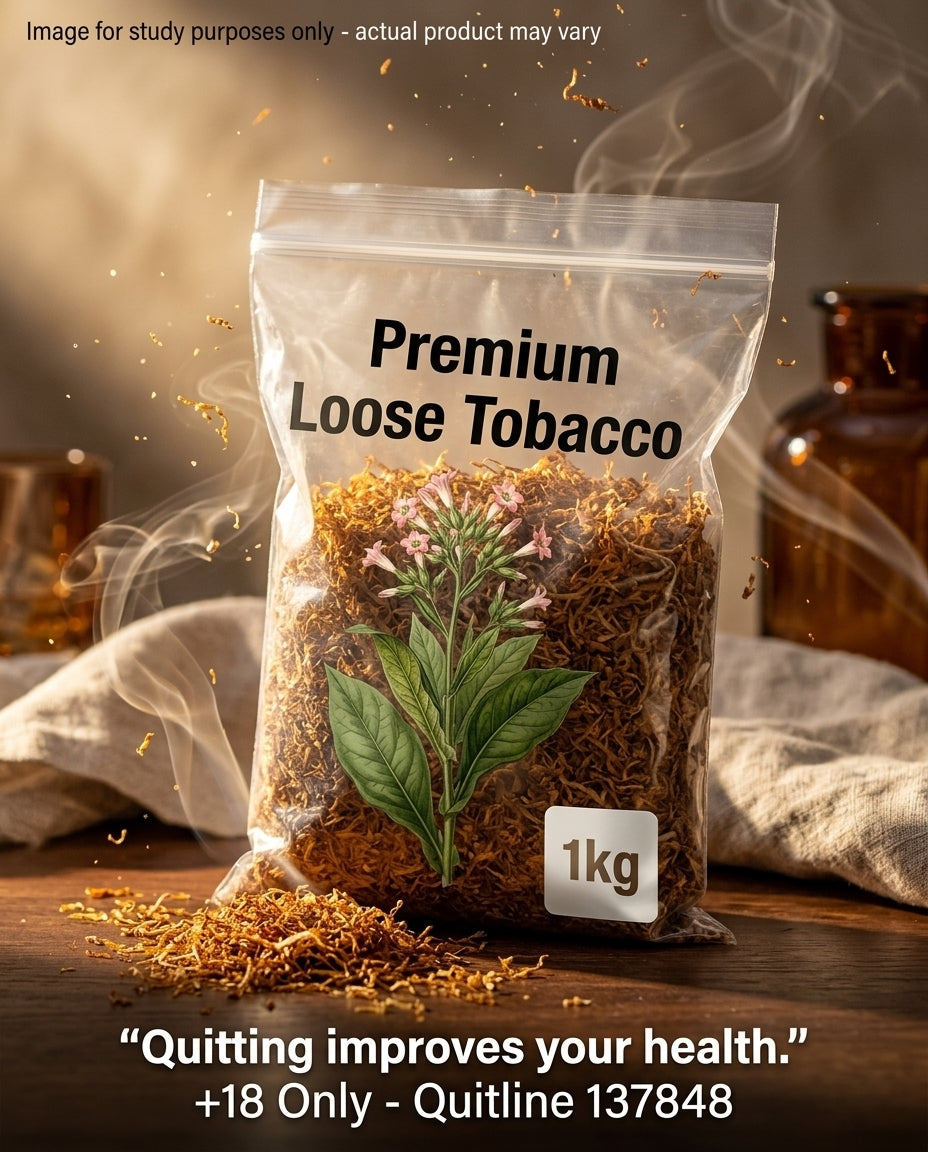
Among the stock lines shippers ask about most: Marlboro Yellow Tropical cigarettes for buyers after a capsule-flavour carton, Premium Loose Tobacco in 500g bags for bulk rolling tobacco buyers, and Marlboro Japan Yellow Tropical for those chasing a lighter capsule blend. Customers in hot regions, from Cairns to inland New South Wales, can request extra insulation or express handling by contacting support before checkout.
What the shipping advice usually gets backwards
Most guides on this topic focus on exotic gear: vacuum-sealed cedar sleeves, purpose-built shipping humidors, engineered cold-chain boxes. That’s overkill for a home shipper, and it distracts from the two things that actually move the needle: an airtight seal with a humidity pack inside it, and cutting transit time.
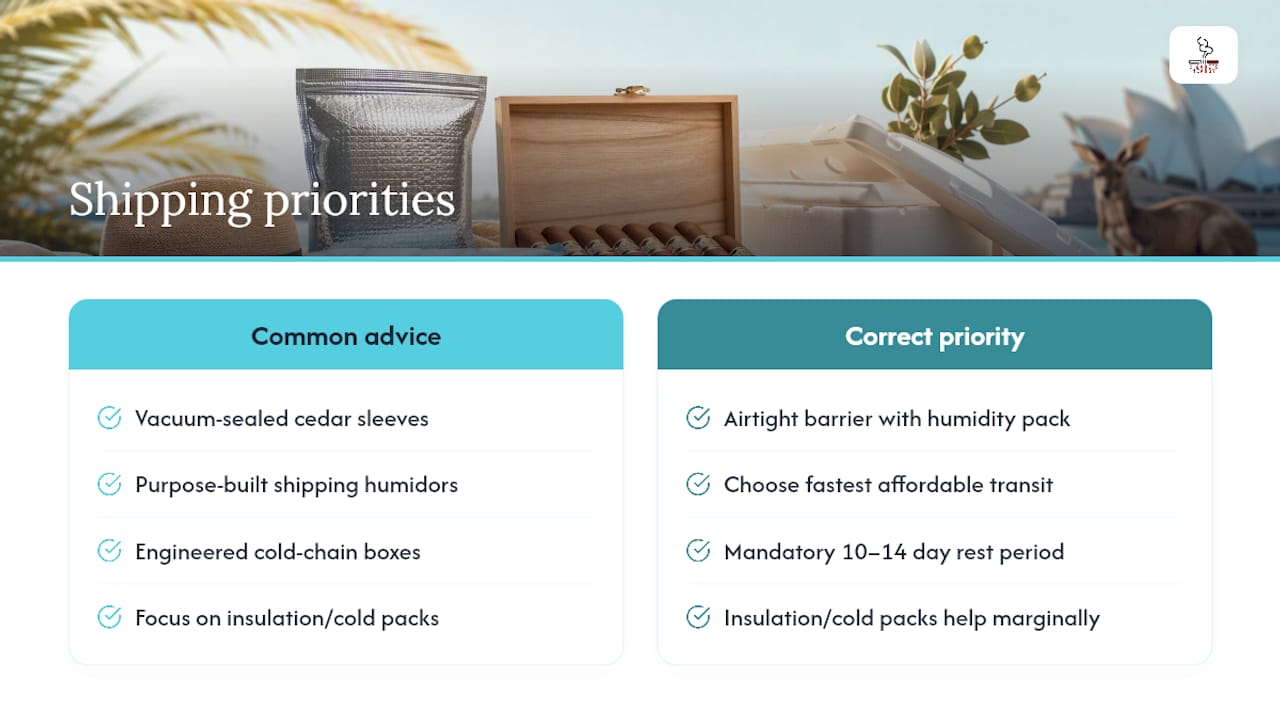
The conventional advice also underplays the resting period. People assume that if a cigar looks fine on arrival, it’s fine to smoke. It usually isn’t, not immediately. The “sick period” is real and skipping the 10 to 14 day rest is the most common mistake among shippers, not the packing itself.
If you take one thing from this guide, prioritise the seal and the pack before you worry about anything else. Insulation and cold packs help at the margins, but a loose humidity pack in an open box does almost nothing. Get the airtight barrier right first, choose the fastest transit you can afford in summer, and treat the rest period as mandatory, not optional.
*— Cigarette Online
Shop hot-weather-ready tobacco and request extra packing
CigaretteNearby is the practical alternative to guessing at packing yourself and hoping a standard parcel survives a heatwave. Every order can be packed with the sealing and humidity-control steps covered above, and you can ask for it directly.
If you’re after single packs, the Marlboro Yellow Tropical cigarettes carton offers a capsule flavour burst at a cheap carton price with fast delivery Australia-wide. Bulk rolling tobacco buyers do better with Premium Loose Tobacco 500g, a rich natural blend in a resealable bag built for shippers who buy in volume. If you want a lighter tropical capsule profile, Marlboro Japan Yellow Tropical delivers straight to your door at a cheap carton price.
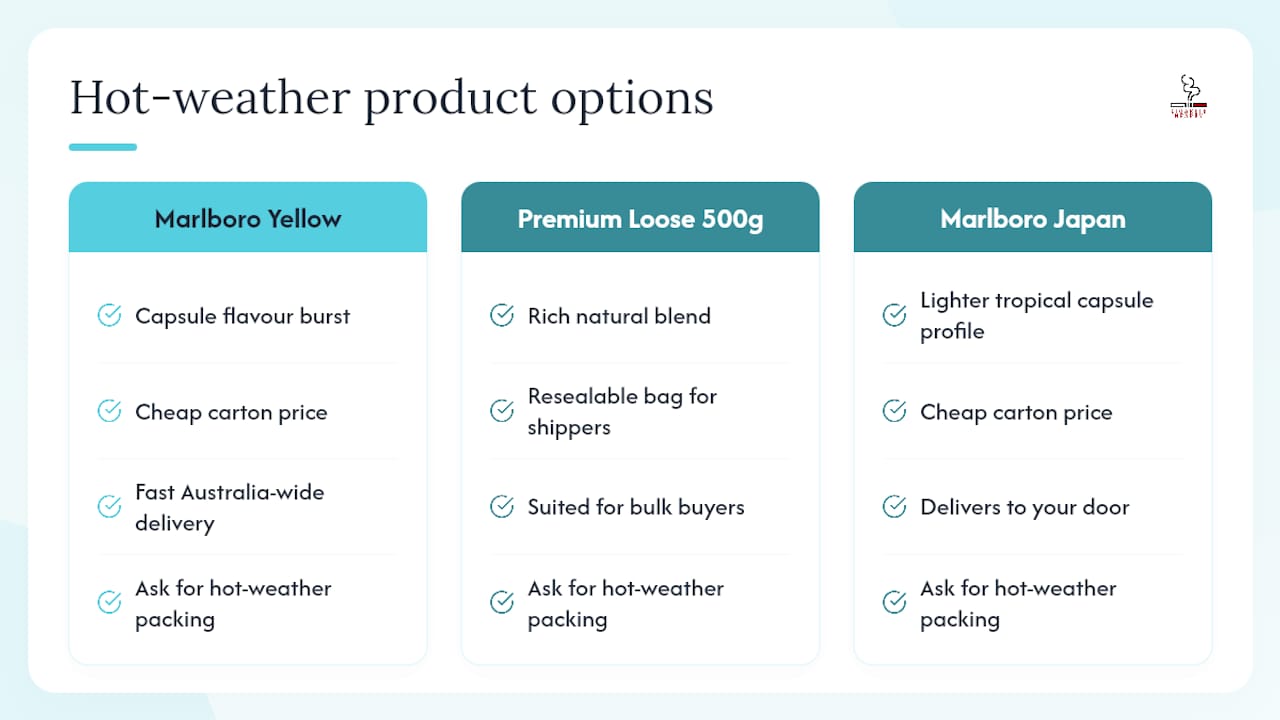
Need express handling or extra insulation for a summer order? Contact customer support when you place your order and ask for hot-weather packing. It’s a small request that can save an entire carton from heat damage.
Sources
- Tobacco – Transport Informations Service
- How does shipping affect cigars? Temperature, humidity and you — Small Batch California
- What humidity and temperature should I actually keep my humidor at? — Paradigm
FAQ
Can you ship cigars safely in summer heat?
Yes, if the parcel is sealed airtight with a humidity pack inside and sent via fast transit. Extreme heatwaves or long-haul routes still carry residual risk even with good packing.
How long should cigars rest after a hot shipment?
Rest cigars in a humidor for 10 to 14 days before smoking, even if they look undamaged on arrival, to recover from the shipping “sick period”.
Does loose tobacco need different packing to cigars?
Loose tobacco benefits from the same airtight-plus-humidity-pack approach, though it tolerates minor moisture shifts better than a rolled cigar wrapper does.
Will CigaretteNearby add extra packing for hot weather on request?
Yes. Customers can contact support before or during checkout to request additional sealing, humidity control, or express dispatch for heat-sensitive orders.
Online Cigarette Nearby provides articles for general information only and may not offer professional advice. Some content is intended for adults aged 18+ only. Help quitting smoking, contact your local Quitline.


