












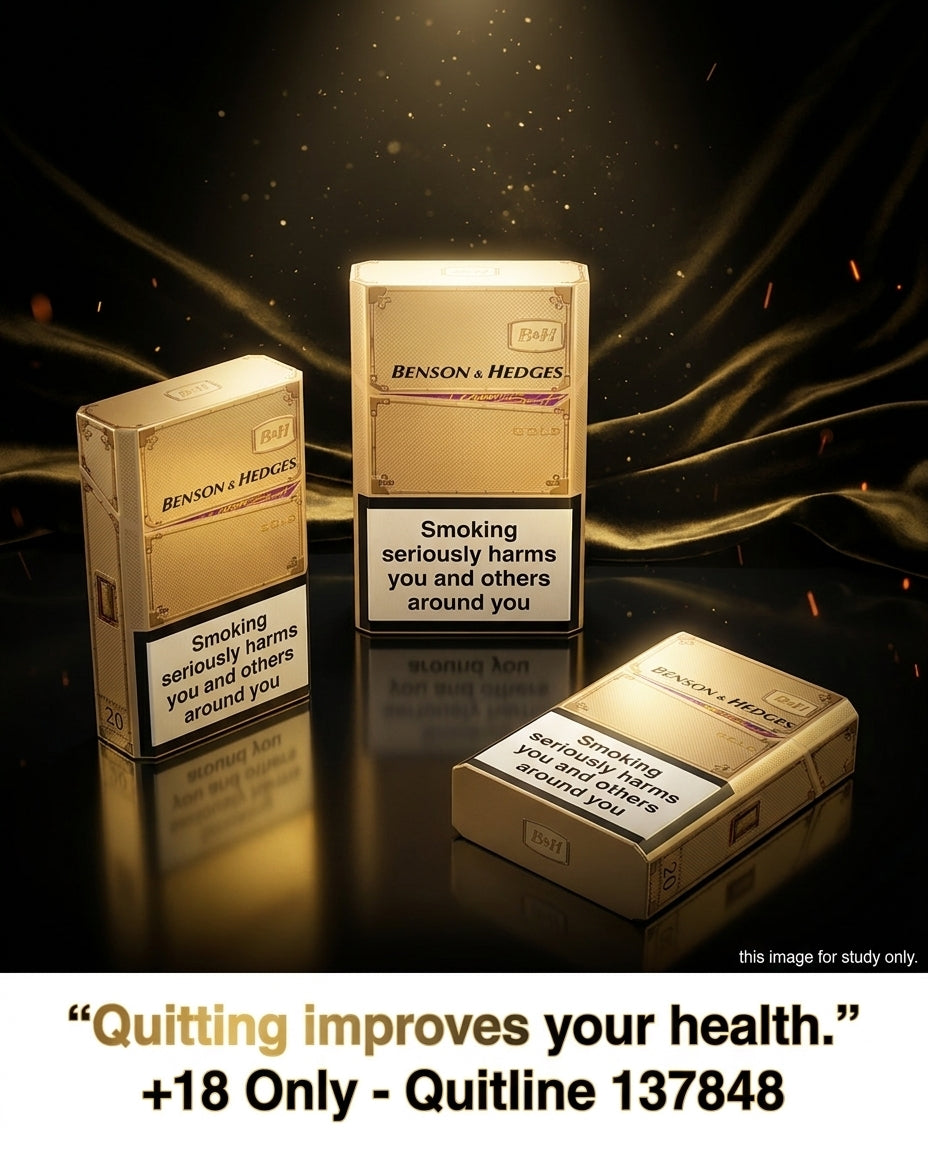
Ask people about smoking habits and most conversations quickly move toward products, preferences or routines.
But if you listen a little longer, another layer quietly appears.
Not the cigarette itself.
Everything around it.
The coffee cup that always seems to be there.
The same playlist starting in the background.
The balcony chair nobody else sits in.
The ten quiet minutes before work begins.
For many adult smokers, routines rarely exist alone. Over time, small companion rituals begin attaching themselves to habits until they become difficult to separate.
And strangely enough, people often notice these rituals more than the smoking itself.
The Cigarette Usually Isn't the Whole Routine ☕
A smoker in Brisbane once described something that sounded almost insignificant:
"If the coffee isn't there, the whole thing feels weird."
Not stronger.
Not worse.
Just... incomplete.
That idea appears surprisingly often.
Across Sydney, Melbourne and Adelaide, smokers frequently describe habits not as isolated actions but as tiny combinations of repeated details.
A certain café.
A particular chair.
Morning sunlight through the same window.
The background sounds of traffic.
Over time these details become part of the experience itself.
Psychologists sometimes call this habit stacking — where one repeated behavior quietly attaches itself to another until they feel inseparable.
And humans do this constantly.
Not just with smoking.
With coffee.
With music.
With driving.
With almost everything.
Quick Compare: Product Habit vs Comfort Ritual
| Habit Type | What People Often Describe |
|---|---|
| Product routine | Same purchase, same preference |
| Comfort ritual | Same atmosphere, timing or environment |
| Emotional routine | Connected to mood |
| Memory routine | Connected to places and experiences |
Tiny Things Become Surprisingly Powerful 🎵
People rarely plan these rituals.
Nobody decides:
"Starting tomorrow I will always listen to jazz while sitting near this exact window."
It simply happens through repetition.
One smoker in Melbourne mentioned accidentally creating a late-night ritual during lockdown years:
Coffee.
Low music.
Open window.
Quiet apartment.
Months later the routine remained — even after life returned to normal.
That happens more than people expect.
Not because objects themselves matter.
Because feelings become attached to patterns.
Did You Know? 🤔
Behavior researchers regularly suggest that repeated environmental cues can become stronger habit triggers than conscious intention itself.
This means people often respond not only to products, but also to surroundings — sounds, places, lighting and emotional context.
Why Quiet Moments Feel Different
There is a reason people remember certain routines so clearly.
Modern life is noisy.
Phones vibrate.
Schedules move.
People rush.
Quiet moments feel increasingly rare.
So when people accidentally create small personal rituals, they often become emotionally noticeable.
Sometimes the ritual becomes:
morning coffee before work ☕
music after late shifts 🎵
evening balcony air 🌆
rain against windows 🌧️
The cigarette simply sits inside the moment rather than becoming the entire moment.
A Small Pattern Store Owners Sometimes Notice
People often think purchasing behavior is completely product-driven.
But repeat buying patterns sometimes suggest something else.
Certain products become connected to specific times:
morning purchases
late-night purchases
weekend purchases
holiday purchases
Over time people occasionally create "situational routines" without realizing it.
Unusual FAQ
Why do people attach smoking habits to coffee?
Repeated routines often become linked over time.
Why does music sometimes become part of smoking rituals?
Sound can create strong emotional associations.
Why do habits feel incomplete without small details?
Environmental cues often become part of routine memory.
Why do people remember smoking moments more than products?
Humans frequently remember experiences rather than isolated objects.
Can quiet places change habit feelings?
Many people describe environments shaping routines strongly.
Health Warning ⚠️
Quitting reduces your risk of cancer.
+18 Only - Call Your Local Quitline


