








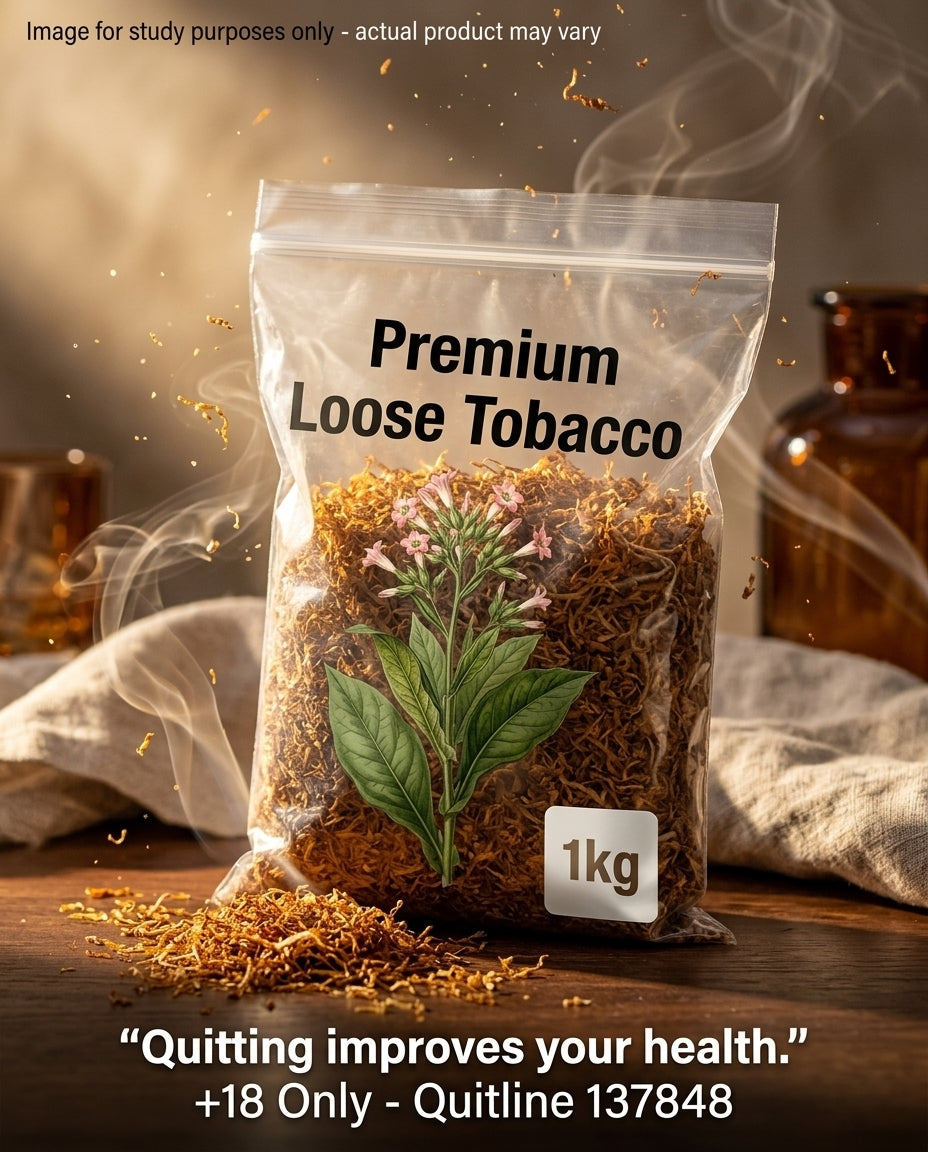








Australia pioneered some of the world's strictest tobacco packaging regulations, fundamentally changing how cigarettes and tobacco products appear to consumers. The tobacco packaging australia landscape is governed by comprehensive legislation that mandates plain packaging, graphic health warnings, and strict labelling requirements. For adult smokers purchasing products from retailers like Cigarette Nearby, understanding these regulations helps explain why all cigarette packets now look remarkably similar, regardless of brand. These laws represent a significant public health initiative aimed at reducing smoking appeal and informing consumers about health risks.
TL;DR: Tobacco packaging Australia regulations require standardised olive-brown packets with graphic health warnings covering 75-90% of surfaces. All cigarette brands must comply with plain packaging laws introduced in 2012, removing logos, colours, and promotional elements while maintaining brand names in standardised text. These measures have contributed to declining smoking rates and influenced tobacco control policies worldwide.
Understanding Tobacco Plain Packaging Legislation in Australia
The Cancer Council Australia discusses the implementation and ongoing impact of Australia's groundbreaking plain packaging laws. The Tobacco Plain Packaging Act 2011 came into full effect on December 1, 2012, making Australia the first country globally to implement such comprehensive tobacco packaging restrictions.
The legislation removed all branding elements including logos, brand imagery, colours, and promotional text from cigarette packets and tobacco products. Instead, all products now appear in a standardised drab dark brown colour (Pantone 448C), often described as olive-brown, which research identified as the least appealing colour to consumers.
Key Requirements of Plain Packaging Laws
Tobacco packaging australia regulations specify detailed requirements that manufacturers and retailers must follow:
- Standardised colour: All packets must use Pantone 448C (olive-brown)
- Brand name restrictions: Names appear in standardised Lucida Sans font
- Size limitations: Font sizes strictly controlled and uniform across brands
- No variant descriptors: Terms like "light," "mild," or "smooth" are prohibited
- Removal of logos: No corporate branding or imagery permitted
- Texture restrictions: Matt finish required, no embossing or special finishes
The primary purpose of these requirements is to reduce the attractiveness of tobacco products, particularly to young people, and eliminate the misleading impression that certain cigarette types are less harmful than others.
Graphic Health Warnings and Surface Coverage Requirements
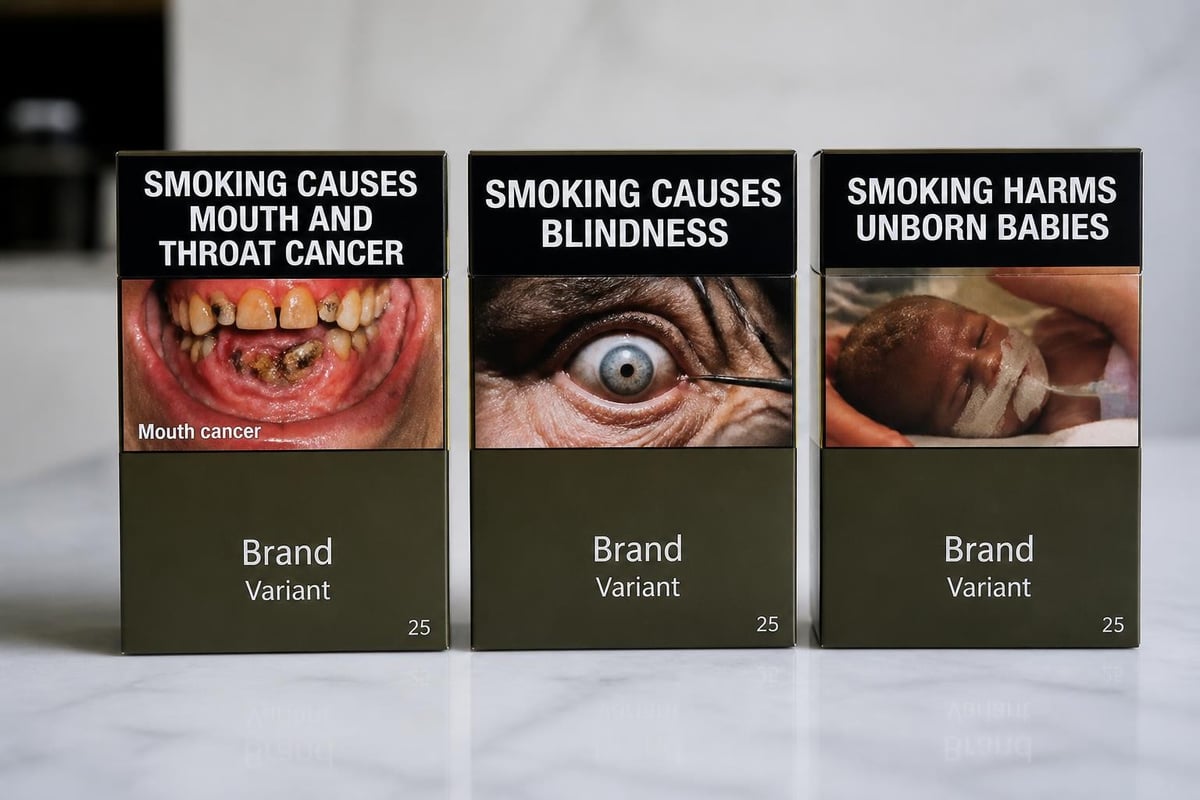
Health warnings represent the most visually dominant feature of tobacco packaging australia under current regulations. These warnings serve to inform consumers about the serious health consequences of smoking and provide information about quitting resources.
Health Warning Specifications
The Department of Health mandates that health warnings must cover substantial portions of tobacco packaging:
| Packet Surface | Warning Coverage | Content Type |
|---|---|---|
| Front of pack | 75% | Graphic image + text warning |
| Back of pack | 90% | Graphic image + text warning |
| Top of pack | Minimum area | Brand name only |
| Sides of pack | Varies | Information messages |
These graphic health warnings feature images depicting smoking-related diseases and health conditions, including lung cancer, emphysema, gangrene, mouth cancer, stroke, and other serious medical consequences. Each warning includes a telephone number for Quitline (13 78 48), Australia's national telephone-based smoking cessation service.
The warnings rotate through 14 different designs, ensuring variety and preventing consumer habituation to any single image. Text warnings include statements such as "Smoking causes peripheral vascular disease," "Smoking causes blindness," and "Smoking harms unborn babies."
Informational Messages
In addition to primary health warnings, tobacco packaging australia regulations require informational messages on packet sides and in specified locations. These messages provide facts about toxic constituents, second-hand smoke dangers, and smoking's impact on family members and the broader community.
Brand Differentiation Within Plain Packaging Constraints
Despite strict standardisation, tobacco manufacturers retain limited opportunities to differentiate their products. Brand names remain the primary distinguishing feature, appearing in standardised text format on designated areas of the packet.
Popular brands available through Australian retailers include Marlboro, Manchester, Dunhill, Benson & Hedges, and Winston. Each maintains distinct positioning through brand name recognition alone.
Permitted Brand Elements
- Brand name in Lucida Sans typeface
- Variant name (e.g., "Blue," "Gold," "Red") in specific font size
- Filter type indication (where applicable)
- Cigarette count (e.g., "20 cigarettes")
- Origin statement and company details in specified format
The regulations prohibit descriptive language that might suggest reduced harm. Terms previously used like "light," "mild," "low tar," or "smooth" cannot appear on packaging. Instead, colour-based variant names (Blue, Gold, Red) have become standard across the industry.
Impact on Retail Display and Point-of-Sale Regulations
Tobacco packaging australia requirements extend beyond the packets themselves to govern how products appear at retail locations. Point-of-sale display restrictions complement plain packaging laws to minimise tobacco product visibility.
Retail Display Restrictions
Tobacco products cannot be openly displayed in retail environments. Instead, they must be stored in closed cabinets or behind screens that prevent customers from viewing products until specifically requesting them. Only authorised retailers can sell tobacco products, and strict licensing requirements apply.
When customers purchase cigarettes online from authorised retailers such as Cigarette Nearby, products arrive in discreet packaging that complies with shipping policies and age verification requirements.

Age Verification and Purchase Requirements
All tobacco sales in Australia require strict age verification:
- Minimum age: 18 years throughout Australia
- Identification requirements: Photo ID mandatory for anyone appearing under 25
- Online verification: Digital age verification systems for e-commerce
- Penalties: Substantial fines for selling to minors
- Retailer responsibilities: Training staff on compliance obligations
Online retailers implement robust age verification processes, with customers required to confirm their age during checkout and potentially provide identification upon delivery.
Compliance Requirements for Retailers and Distributors
Businesses involved in tobacco sales must understand and comply with comprehensive tobacco packaging australia regulations. Non-compliance carries significant penalties and potential loss of retail licences.
Retailer Obligations
| Requirement | Description | Penalty for Non-Compliance |
|---|---|---|
| Licencing | Valid tobacco retail licence required | Fines up to $222,000 |
| Product verification | Ensure all stock meets plain packaging standards | Fines and product seizure |
| Display compliance | Products hidden from public view | Fines up to $44,000 |
| Age verification | Strict ID checks for customers | Fines and licence suspension |
| Record keeping | Maintain supply chain documentation | Administrative penalties |
Retailers must source products from legitimate suppliers who comply with Australian packaging regulations. Counterfeit or non-compliant products face immediate seizure, with retailers potentially liable for stocking them.
Distributor and Importer Requirements
The Tobacco Plain Packaging Act specifies detailed requirements for anyone importing or distributing tobacco products in Australia. All products entering the Australian market must comply with packaging regulations before clearance through customs.
Importers must maintain comprehensive documentation including:
- Manufacturer details and production location
- Compliance certificates confirming adherence to Australian standards
- Health warning specifications and placement verification
- Packaging colour certification matching Pantone 448C requirements
- Font and text compliance documentation
Health Warnings Content and Rotation Schedule
The tobacco packaging australia framework includes sophisticated requirements for health warning content, design, and rotation. These warnings undergo periodic updates based on current health research and effectiveness studies.
Current Health Warning Messages (2026)
Australia's health warnings cover multiple smoking-related health consequences:
Cancer warnings:
- Smoking causes lung cancer
- Smoking causes mouth and throat cancer
- Smoking causes peripheral vascular disease
Cardiovascular warnings:
- Smoking clogs your arteries
- Smoking causes heart disease
- Smoking causes stroke
Reproductive health warnings:
- Smoking harms unborn babies
- Smoking causes impotence
- Tobacco smoke is toxic to children
Other health impacts:
- Smoking causes blindness
- Smoking causes emphysema and chronic bronchitis
- Smoking causes gangrene
- Don't let children breathe your smoke
Each warning pairs with a graphic image specifically designed to communicate the health consequence visually and memorably. Research demonstrates that graphic warnings prove more effective than text-only messages in motivating quit attempts and deterring smoking initiation.
Legal Challenges and International Influence
Australia's tobacco packaging australia laws faced significant legal challenges following their introduction. Tobacco companies mounted constitutional challenges domestically and initiated international trade disputes, arguing the regulations violated intellectual property rights and international trade agreements.
Constitutional Challenges
The High Court of Australia upheld the plain packaging legislation in a landmark 2012 decision. The court ruled that plain packaging constitutes a legitimate exercise of government power to protect public health and does not constitute an acquisition of property requiring compensation under the Australian Constitution.
This decision established important legal precedent for tobacco control measures and public health legislation more broadly. Plain packaging laws worldwide have since referenced Australia's successful defence of these regulations.
International Trade Disputes
Several countries challenged Australia's plain packaging laws through the World Trade Organisation (WTO), arguing they created unnecessary barriers to trade and violated intellectual property provisions. After extensive proceedings, the WTO dismissed these challenges in 2018, confirming that Australia's measures legitimately protect public health.
This international validation encouraged numerous other countries to adopt similar plain packaging requirements, including:
- United Kingdom (2016)
- France (2016)
- Ireland (2017)
- Norway (2017)
- New Zealand (2018)
- Canada (2019)
- Netherlands (2020)
- Belgium (2020)
- Slovenia (2020)
Special Packaging Requirements for RYO Tobacco
Roll-your-own (RYO) tobacco faces distinct tobacco packaging australia requirements reflecting the different product format. Pouches and tins of loose tobacco must comply with the same colour, health warning, and branding restrictions as cigarette packets.
RYO-Specific Regulations
Pouch requirements:
- Same Pantone 448C colour specification
- Health warnings covering 75% (front) and 90% (back) of principal display surfaces
- No promotional imagery or texture features
- Standardised font for brand names
Popular RYO tobacco brands available in Australia include premium options like Drum, Golden Virginia, and White Ox. These products appear in standardised brown pouches with prominent health warnings, maintaining only brand name differentiation.
The regulations specify how health warnings adapt to different package shapes and sizes. Cylindrical tins require warnings positioned to maintain visibility regardless of rotation, while flexible pouches must display warnings on defined front and back surfaces.

Manufacturing and Production Compliance Standards
Tobacco manufacturers producing products for the Australian market must implement comprehensive quality control and compliance systems. These extend from production facilities through to final packaging and distribution.
Production Requirements
Manufacturing facilities must:
- Maintain detailed production records documenting compliance with packaging specifications
- Implement quality assurance systems verifying correct health warning placement
- Use certified printing processes ensuring colour accuracy and warning legibility
- Conduct regular audits of packaging materials and finished products
- Provide compliance documentation to Australian regulatory authorities
The Australian Border Force works in conjunction with the Department of Health to intercept non-compliant products at the border. Advanced detection systems identify packages that don't meet regulatory specifications, preventing them from entering the Australian market.
Packaging Material Specifications
Beyond visual requirements, tobacco packaging australia regulations specify technical aspects of packaging materials:
- Cardboard thickness and durability standards
- Print quality requirements for health warnings
- Cellophane wrapping specifications and permitted materials
- Seal integrity requirements preventing tampering
- Inner foil specifications maintaining product freshness
These technical standards ensure packaging adequately protects products while maintaining health warning integrity throughout the product lifecycle.
Consumer Awareness and Information Resources
Despite comprehensive packaging regulations, many Australian smokers seek additional information about tobacco products, brands, and purchasing options. Authorised retailers provide valuable information resources while maintaining strict compliance with advertising restrictions.
Information Availability for Adult Smokers
Adult smokers can access product information through legitimate channels:
Authorised websites like Cigarette Nearby provide detailed product specifications, brand information, and purchasing options while displaying appropriate health warnings. These platforms offer valuable resources including:
- Brand comparisons and product guides
- Pricing information and special offers through best offers collections
- Tobacco content and tar/nicotine information
- Customer support and frequently asked questions
Retailers must balance providing useful product information with strict prohibitions on promotional content. Factual information about products remains permissible, while any content that could be construed as advertising or promotion violates regulations.
Health Resources and Quit Support
All tobacco packaging australia compliant products prominently display Quitline information (13 78 48), providing smokers with direct access to professional cessation support. Additional resources include:
- Quitline: Telephone counselling and quit support
- Online cessation programmes: Evidence-based digital interventions
- Nicotine replacement therapy: Information about cessation aids
- General practitioner support: Medical assistance for quitting
Retailers selling tobacco products must include health disclaimer information and direct customers to appropriate quit resources when requested.
Emerging Trends and Future Regulatory Developments
The tobacco packaging australia regulatory environment continues evolving as policymakers assess the effectiveness of current measures and consider additional restrictions. Several potential developments may affect tobacco packaging in coming years.
Potential Future Measures
Standardised product shape and size: Some public health advocates propose mandating uniform cigarette dimensions and packet sizes to further reduce product appeal and prevent perceived quality differentiation.
Enhanced graphic warnings: Regular updates to warning images maintain effectiveness and prevent consumer habituation. New warnings may address emerging health research or target specific demographic groups.
Constituent disclosure requirements: Expanded requirements for listing toxic constituents and emissions data may appear on packaging or through digital channels.
Sustainability considerations: Environmental regulations may influence packaging materials, potentially requiring recyclable or biodegradable materials while maintaining plain packaging compliance.
Compliance Monitoring and Enforcement
Regulatory authorities continuously refine monitoring and enforcement approaches. Advanced technologies including:
- Digital authentication systems verifying legitimate products
- Automated inspection systems scanning packaging compliance
- Supply chain tracking preventing counterfeit products
- Consumer reporting mechanisms identifying non-compliant products
These systems help maintain the integrity of tobacco packaging australia regulations and protect consumers from counterfeit or non-compliant products.
Product Categories and Variant Identification
Within plain packaging constraints, tobacco products maintain categorisation through permitted naming conventions. Understanding these categories helps consumers identify preferred products despite standardised appearance.
Cigarette Strength Categories
Manufacturers use colour-coded naming to indicate approximate strength levels:
| Variant Colour | Traditional Description | Approximate Characteristics |
|---|---|---|
| Red | Full flavour | Higher tobacco content, robust taste |
| Gold/Yellow | Light | Milder taste, reduced perception |
| Blue | Ultra light | Lightest variants available |
| Green | Menthol | Menthol-flavoured variants |
| Silver | Ultra light menthol | Menthol with lighter tobacco |
Products like Manchester Red represent full-flavour options, while Manchester Light caters to those preferring milder taste profiles. These distinctions remain permissible under tobacco packaging australia regulations through colour-based variant names.
Specialty Product Categories
Slim and super-slim cigarettes: Products like Esse Light Super Slim maintain distinct packaging dimensions while complying with plain packaging requirements. Health warnings adapt proportionally to different packet sizes.
Capsule cigarettes: Variants featuring flavour capsules, such as Manchester Double Drive, must display this feature through standardised text only, without promotional imagery or enhanced descriptions.
Premium and luxury brands: High-end options including Davidoff and Dunhill maintain positioning through brand heritage and product quality rather than packaging differentiation.
Economic Impact on the Tobacco Industry
Tobacco packaging australia regulations created substantial economic consequences for manufacturers, retailers, and the broader industry. Understanding these impacts provides context for current market dynamics.
Manufacturing and Supply Chain Costs
Plain packaging implementation required significant investment in:
- Production line modifications adapting to standardised packaging specifications
- Inventory management transitioning from branded to plain packaging
- Compliance systems ensuring adherence to detailed regulations
- Quality control enhancements verifying correct health warning placement
- Legal and regulatory expenses navigating complex compliance requirements
These costs affected pricing structures and market competition. Some smaller brands exited the Australian market due to reduced differentiation opportunities and compliance burdens, while major manufacturers absorbed costs and maintained market presence.
Retail and Distribution Effects
Retailers adapted to plain packaging through:
- Enhanced product knowledge training helping staff identify products by standardised names
- Inventory management systems tracking products by variant codes rather than visual identification
- Customer service protocols assisting customers in identifying preferred brands
- Compliance monitoring ensuring stocked products meet regulatory requirements
Online retailers developed sophisticated filtering and search systems helping customers navigate standardised product appearances. Platforms like Cigarette Nearby's best-selling collection organise products by brand, strength, and variant despite visual uniformity.
Cross-Border Considerations and Interstate Variations
While tobacco packaging australia regulations apply nationally, certain interstate variations affect purchasing and distribution. Understanding these nuances helps consumers navigate the regulatory landscape effectively.
National Consistency in Packaging
The Tobacco Plain Packaging Act establishes Commonwealth (federal) requirements applicable throughout Australia. All states and territories must comply with these national standards, ensuring consistent packaging regardless of purchase location.
However, state and territory governments maintain jurisdiction over certain aspects including:
- Retail licensing requirements and application processes
- Point-of-sale display regulations and specific implementation
- Minimum pricing policies in some jurisdictions
- Retail location restrictions near schools or public facilities
- Additional labelling requirements (where not inconsistent with Commonwealth law)
Interstate Purchasing and Delivery
Adult smokers purchasing tobacco products online benefit from nationwide delivery services. Platforms offering Australia-wide shipping navigate varying state requirements while maintaining Commonwealth packaging compliance.
Delivery timeframes typically range from 2-5 business days across Australia, with carriers implementing age verification protocols at delivery points. Discreet packaging protects customer privacy while maintaining regulatory compliance for transported tobacco products.
Authentication and Counterfeit Prevention
Tobacco packaging australia regulations include provisions for product authentication and counterfeit prevention. These measures protect consumers and maintain the integrity of regulated tobacco products.
Security Features
Legitimate tobacco products incorporate various security features:
- Unique identification codes trackable through supply chains
- Holographic elements on tax stamps and seals
- Microprint details visible under magnification
- Digital verification systems accessed through regulatory databases
- Tamper-evident seals indicating package integrity
Consumers purchasing from authorised retailers receive genuine products meeting all regulatory requirements. Reputable online stores source products directly from legitimate distributors, ensuring authenticity and compliance.
Identifying Non-Compliant Products
Warning signs of counterfeit or non-compliant tobacco products include:
Packaging irregularities:
- Incorrect Pantone colour (not exact olive-brown shade)
- Blurry or low-resolution health warnings
- Misspelled text or grammatical errors
- Incorrect font types or sizing
- Missing or incomplete regulatory information
Suspicious pricing: Products significantly cheaper than market rates may indicate counterfeits or illicitly imported goods avoiding proper taxation and regulation.
Unusual sourcing: Products from unauthorised sellers, market stalls, or informal channels typically don't meet tobacco packaging australia compliance standards.
Environmental Considerations and Packaging Waste
Plain packaging regulations interact with growing environmental awareness around packaging waste. Tobacco packaging australia creates substantial waste streams, prompting discussions about sustainability measures.
Current Packaging Materials
Standard cigarette packaging comprises:
- Cardboard packet: Primary packaging containing cigarettes
- Aluminium foil liner: Maintaining product freshness
- Cellophane wrapper: Outer protective layer
- Tax stamps and seals: Regulatory identification elements
These materials create significant waste, with billions of cigarette packets discarded annually across Australia. Environmental advocates call for enhanced recycling programmes and sustainable packaging alternatives.
Sustainability Initiatives
Potential measures balancing environmental goals with plain packaging compliance include:
- Recyclable materials: Transitioning to fully recyclable cardboard and wrapper materials
- Biodegradable components: Developing compostable alternatives to current materials
- Reduced packaging volume: Minimising excess materials while maintaining product protection
- Recycling programmes: Industry-funded collection and processing systems
- Consumer education: Information about proper disposal methods
These initiatives must maintain compliance with health warning requirements and plain packaging specifications while advancing environmental objectives.
Digital Age and Online Tobacco Retail
The tobacco packaging australia regulatory framework predates modern e-commerce growth, creating unique considerations for online retail. Digital platforms selling tobacco products must navigate packaging regulations alongside digital advertising restrictions.
Online Retail Compliance
Authorised online tobacco retailers implement comprehensive compliance measures:
Age verification systems: Multi-stage verification confirming customers meet minimum age requirements before purchase completion and delivery.
Product presentation: Website product images must display compliant packaging including visible health warnings. Promotional content restrictions apply to digital environments as strictly as physical retail.
Information provision: Factual product information remains permissible, helping customers make informed choices among standardised products.
Delivery protocols: Carriers implement age verification at delivery, refusing handover without acceptable identification confirming recipient age.
Customer Support and Information
Online retailers provide extensive customer support helping navigate product selection despite plain packaging uniformity. Contact facilities enable customers to ask questions about products, variants, and specifications without violating promotional restrictions.
Comprehensive FAQ sections address common queries about tobacco packaging australia regulations, delivery processes, product authenticity, and purchasing procedures. This educational content helps customers understand the regulatory environment while making informed purchasing decisions.
Australia's tobacco packaging regulations represent comprehensive public health measures that fundamentally transformed how cigarette products appear and are marketed. These plain packaging laws, graphic health warnings, and strict compliance requirements work together to reduce smoking appeal and inform consumers about serious health risks.
For adult smokers seeking convenient access to compliant tobacco products with Australia-wide delivery, Cigarette Nearby offers a secure, age-verified platform featuring popular brands including Marlboro, Manchester, Dunhill, Benson & Hedges, Winston, and many others. Browse trusted collections, access detailed product information, and enjoy discreet delivery within 2-5 business days across Australia.


