





Refillable lighters win for daily smokers, hands down. A soft-flame butane refillable pays for itself within two to three months of regular use and keeps working long after a disposable would be sitting in landfill. Disposables still make sense for occasional smokers, glove-box backups, or anyone who wants a spare that costs almost nothing to lose. Torch lighters earn their keep for cigars, pipes, and outdoor use where wind kills a soft flame instantly.
The maths and the environmental case point the same direction: refillables cost less over time and generate less waste per year of use, provided you actually refill them instead of binning them at the first hiccup.
- Daily smoker: refillable soft-flame butane lighter, refilled weekly.
- Occasional smoker (few times a week): disposable lighter, or a cheap refillable if you don’t mind the upkeep.
- Candle-only or indoor user: Zippo-style naphtha lighter for the nostalgia and reliable indoor flame.
- Outdoor, weed, or cigar smoker: torch/jet refillable for wind resistance and a hotter, more even flame.
Pro Tip: If you smoke a pack a day and currently buy disposables, track how many you go through in a month. Multiply that by $2 and compare it against one refillable and a few butane cans. The gap is usually bigger than people expect.
Key Takeaways
Refillable lighters cost less over time and generate less waste for daily smokers, but only when they’re actually kept and refilled rather than replaced early.
| Point | Details |
|---|---|
| Match lighter to use | Daily smokers save with refillables; occasional smokers can stick with disposables. |
| Break-even is fast | Most daily users recover a refillable’s upfront cost within two to three months. |
| Butane quality matters | Refined butane reduces valve clogging and extends the life of torch lighters. |
| Refill safely | Never refill near open flames or while smoking, and let the lighter cool before testing. |
| Save on tobacco too | CigaretteNearby’s bulk discounts on packs like Manchester Light Cigarettes complement the savings from switching to a refillable lighter. |
Table of Contents
- Disposable vs refillable lighters: a quick side-by-side comparison
- What do disposable and refillable lighters actually cost?
- How long do disposable and refillable lighters actually last?
- Which lighter is better for the environment?
- How do you choose a lighter for your actual use case?
- How do you refill a butane lighter safely?
- Cigarette Nearby catalogue: how this connects to your lighter choice
- How do you dispose of a disposable lighter properly?
- Why we’d tell most readers to go refillable
- Get your everyday smokes sorted while you sort your lighter
- Sources
- FAQ
Disposable vs refillable lighters: a quick side-by-side comparison
Disposables win on upfront simplicity. Refillables win on almost everything else if you’re prepared to maintain them. Here’s the quick version before we get into the numbers.
Disposable lighters:
- Cheap to buy, no maintenance, ready to use straight out of the packet.
- Flame quality declines as the fluid runs low, and you can’t top them up.
- Plastic and metal end up in general waste almost every time.
Refillable lighters:
- Higher upfront cost, but butane refills cost cents compared to buying new.
- Better build quality generally, with replaceable flints and O rings extending life for years.
- Three main types worth knowing: soft-flame butane for everyday use, torch/jet butane for wind and precision tasks, and naphtha wick lighters (the Zippo-style design) for a classic flame that’s easy to relight but evaporates if left unused for weeks.
Best for: occasional smokers and backups → disposable. Daily smokers and cigar or outdoor users → refillable.
What do disposable and refillable lighters actually cost?
The upfront price gap is smaller than most people assume, and the running costs are where refillables pull ahead fast.
Disposable lighters typically retail for $1 to $3 each, depending on brand and where you buy them. A basic soft-flame refillable starts around $5, while a decent torch lighter or a Zippo-style naphtha model can run anywhere from $20 to $80 depending on the build and brand. That’s the entry barrier that puts a lot of people off refillables in the first place, even though it disappears within a season of regular use.
Running costs tell the real story. A single butane canister, often under $10, refills a soft-flame lighter dozens of times. Zippo-style lighters need lighter fluid and the occasional flint, both cheap and long-lasting. Compare that to buying a fresh disposable every one to two weeks and the ongoing spend adds up fast.
Here’s a worked example for a daily smoker lighting up roughly 15 to 20 times a day:
- Disposable route: one lighter lasts about 7 to 10 days at that usage rate, costing roughly $2 per week, or $8 to $9 a month.
- Refillable route: a $15 soft-flame lighter plus one $8 butane canister every two months covers the same usage, working out to around $4 a month after the first fill.
- Break-even point: most daily users recover the upfront cost of a refillable within two to three months, after which the savings just keep compounding.
Light lighter more casually, say a few times a week, and the break-even stretches out to six months or longer. That’s the point where a disposable can genuinely be the smarter buy, at least until the novelty of not running out wears thin.
How long do disposable and refillable lighters actually last?
Disposables are built for one job: burn until the fuel runs out, then get replaced. Expect one to three weeks of life from a typical disposable depending on how often you light up, with no way to extend it once the fluid drops low.
Refillables play a longer game. A quality soft-flame butane lighter can last several years with basic care, refuelled dozens of times over its life. Torch lighters have more moving parts, jets and ignition mechanisms mainly, and tend to need a clean or a flint swap every few months of heavy use. Zippo-style naphtha lighters are famously long-lived; the wick and flint wear out, but the metal case and mechanism can outlast the person carrying it.
Three things kill refillables early:
- Valve clogging from low-grade or unrefined butane leaving residue in the jet.
- Flint wear, which shows up as weaker sparks and slower ignition.
- Seal leaks, usually from overfilling or filling while the lighter’s still warm.
Pro Tip: Stick to refined or triple-refined butane rather than the cheapest can on the shelf. It costs a little more per fill but avoids the gunked-up valve that quietly kills torch lighters months before they should die.
Maintenance is simple: purge old gas before refilling, wipe down the flint wheel occasionally, and give the whole unit a clean every couple of months if you’re a heavy user.
Which lighter is better for the environment?
Neither option is spotless, and the honest answer depends on how you actually use it.
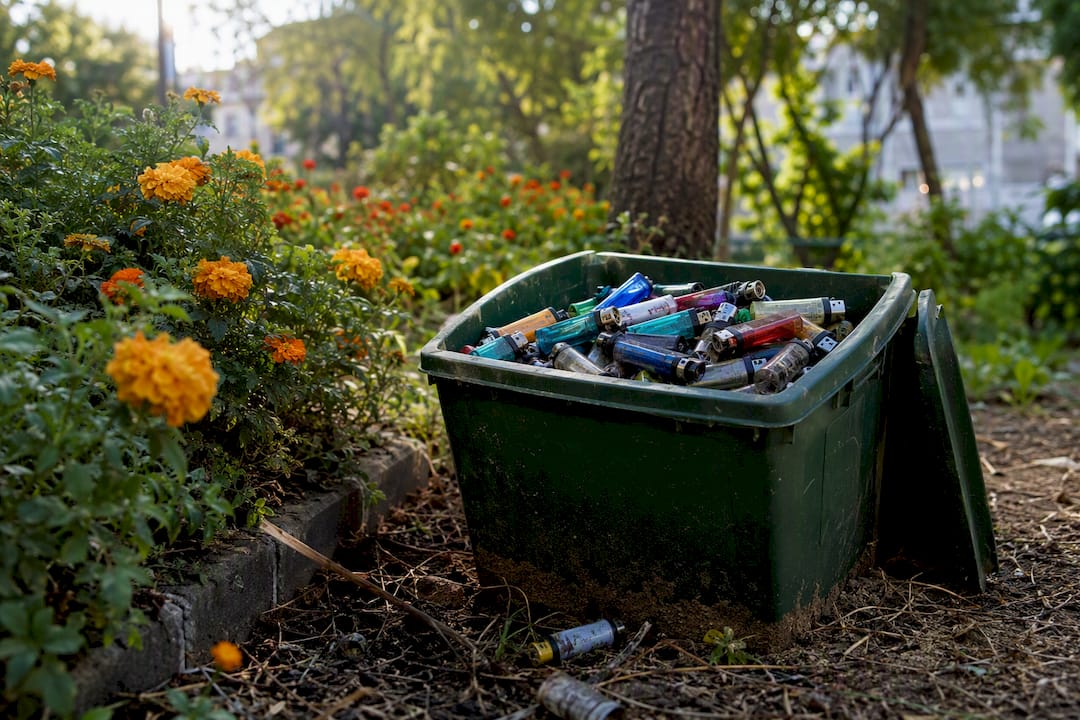
Disposable lighters are a mix of plastic body, metal fuel tank, and a flint wheel assembly that most kerbside recycling systems don’t accept. They’re built to be binned, and most end up exactly there after a few weeks of use, adding up to a steady stream of small plastic waste.
Refillables shift the equation by spreading the environmental cost of manufacturing one lighter across years of reuse instead of weeks. But the case isn’t as clean-cut as marketing suggests. Manufacturer-level lifecycle analysis has flagged that refillable options aren’t automatically the lower-impact choice once you factor in heavier materials and how long a person actually keeps and reuses the lighter before losing or discarding it. Independent lifecycle research backs that nuance up: outcomes depend heavily on real-world activation counts and disposal behaviour, not the theoretical maximum a lighter’s designed for.
Three practical steps improve the numbers whichever way you lean:
- Buy one refillable and actually use it for years, rather than treating it as disposable once the novelty fades.
- Choose durable, repairable models with replaceable parts over sealed units.
- Collect empty butane canisters and dead disposables for proper disposal rather than tossing them loose.
How do you choose a lighter for your actual use case?
Price shouldn’t be the only filter. Match the lighter to what you’re actually lighting, and the right choice becomes obvious fast.
- Outdoor and cigar smokers need a windproof torch or jet lighter. The flame is thinner but far hotter, and it won’t blow out in a breeze that would snuff a soft flame instantly. This is also the pick for pipe smokers who need sustained, even heat.
- Indoor and candle users are better served by a soft-flame refillable or a Zippo-style naphtha lighter, which gives a broader flame that’s gentler and easier to control at close range.
- Pocket carry and daily smokers want something small, refillable, with an easily accessible fill valve and a flame adjuster so you’re not burning through butane faster than necessary.
- Anyone buying in bulk butane should check canister compatibility before committing to a brand. Universal nozzle fittings are common, but some torch lighters need specific adapters.
Child locks matter if you’ve got kids in the house, and they’re worth the small trade off in speed of ignition. If you’re weighing this up alongside how you buy your smokes generally, it’s worth reading how smokers compare cigarettes, RYO and loose tobacco before making a switch, since the same cost logic applies to lighters as it does to tobacco formats.
How do you refill a butane lighter safely?
Refilling is simple once you’ve done it a couple of times, but the safety basics aren’t optional.
Refilling lighters incorrectly can cause serious or fatal injury. Never smoke while refilling, always refill in a well-ventilated area away from open flames, and store butane canisters cool and out of direct sunlight, according to the South Australian Metropolitan Fire Service.
Only refill lighters actually designed to accept butane. Attempting to refill a sealed disposable lighter is unsafe and not what the design allows for.
The correct sequence, step by step:
- Check the lighter is cool to the touch, not warm from recent use.
- Turn it upside down and depress the fill valve with the canister’s nozzle to purge any remaining gas and air.
- Insert the nozzle fully, press down firmly, and fill in short bursts of two to three seconds rather than one long blast.
- Wipe away any excess butane that’s escaped around the valve.
- Let the lighter sit for a few minutes so it returns to room temperature before testing the flame; filling and firing immediately stresses the seals.
- Adjust the flame height if needed, then test ignition twice before pocketing it.
Butane quality matters more than most people realise. Triple-refined butane burns cleaner and leaves far less residue in the valve jet than cheap, unfiltered cans, which is the single biggest factor in how long a torch lighter’s nozzle stays clog-free.
Cigarette Nearby catalogue: how this connects to your lighter choice
If you’re a regular smoker weighing up disposable vs refillable lighters, the same cost logic applies to how you buy your cigarettes. Buying in bulk or switching to better-value packs compounds savings the same way a refillable lighter does over a disposable.
- Manchester Light Cigarettes (10 Packets x 20s) suit everyday smokers after a smooth, mild blend without the premium price tag, pairing naturally with a reliable everyday refillable.
- Manchester Superslims Chocolate Cigarettes (10 Packs x 20s) offer a light cocoa aroma slim style at strong value, delivered fast across the country.
- Double Happiness Gold Cigarettes (10 Packs x 20s) suit carton buyers chasing a smooth, mellow classic taste at an affordable per-pack price.
Regular pocket cigarette buyers are exactly the people who benefit most from a refillable lighter. If you’re lighting up multiple times a day already, the running cost of butane disappears into rounding error next to your tobacco spend. Browse the full catalogue for more everyday options that suit your buying habits.
One smoker’s switch from disposables to refillable
A regular customer in Newcastle, New South Wales, made the switch after realising he was buying a new disposable roughly every ten days.
Beyond the savings, he noted fewer failed lights in windy conditions and a flame that stayed consistent right up until the next refill, rather than sputtering out as a disposable runs dry.
How do you dispose of a disposable lighter properly?
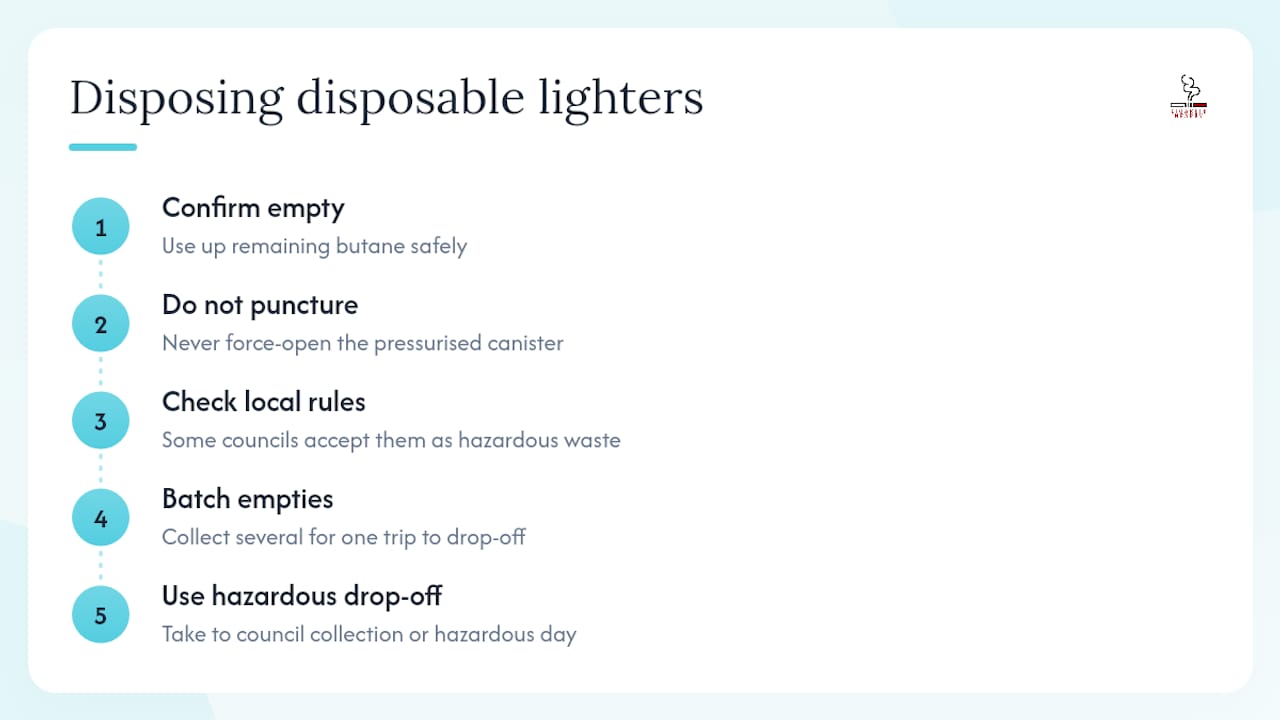
Most disposable lighters end up in general household waste, and that’s largely unavoidable given how they’re built. The plastic body and metal fuel reservoir aren’t separated by standard kerbside recycling, so tossing an empty disposable in with regular rubbish is the realistic default for most households.
Before binning one, make sure it’s genuinely empty. A lighter with leftover butane is a fire risk in a rubbish truck or landfill, so use up any remaining fuel safely rather than discarding a half-full unit. Never puncture or force open a disposable lighter to empty it faster; the pressurised canister inside can cause injury if punctured.
Some councils run hazardous household waste collection days that accept small pressurised items, including lighters, separately from general rubbish. Check with your local council before assuming standard recycling bins are the right destination, since acceptance varies by region and most standard recycling streams reject lighters outright due to the mixed materials and residual fuel risk.
If you go through several disposables a month, keeping a small container to collect the empties for a single trip to a hazardous waste drop off point is more practical than dealing with them one at a time. It also reduces the temptation to force one open out of impatience, which is where most disposal-related injuries actually happen.
Why we’d tell most readers to go refillable
Most of the advice out there treats this as a straight cost comparison, and that undersells the real difference. The bigger shift is behavioural: once you own a refillable and get comfortable topping it up, you stop thinking about lighters as disposable at all, which changes how much butane and plastic you get through in a year without you really trying.
The one thing we’d push back on is the idea that refillables are automatically the “green” choice. They’re only better for the planet if you actually keep and refill the same unit for years. Buy a cheap refillable, lose it after a fortnight, and you’ve done worse than a disposable would have. Whichever way you land, this is a decision for adult smokers to make with eyes open, not a lifestyle recommendation for anyone who doesn’t already smoke.
Get your everyday smokes sorted while you sort your lighter
CigaretteNearby is the practical next stop once you’ve settled on a refillable lighter and want to sort the tobacco side of your routine too. Where general retail often means paying full shelf price pack by pack, CigaretteNearby focuses on bulk purchase discounts and ongoing seasonal deals, so the savings you’re chasing with a refillable lighter carry through to what you’re actually smoking. Delivery lands with discreet packaging, and support is available around the clock if a question comes up before or after you order. Whether you’re after everyday packs like Manchester Light or carton-sized value with Double Happiness Gold, browse the full range at CigaretteNearby and place your order to see the bulk pricing for yourself.
Sources
- South Australian Metropolitan Fire Service — Hazardous materials fact sheets
- Redheads — butane gas refill
- BIC investor ESG presentation
FAQ
Are refillable lighters better than disposables?
For daily smokers, yes. Refillables cost less over time, hold a more consistent flame, and produce less waste per year of use, provided you actually refill and keep the same unit.
Is it cheaper to refill a lighter or buy a new one?
Refilling is almost always cheaper. A butane canister under $10 refills a soft-flame lighter dozens of times, while buying a fresh disposable every one to two weeks adds up to roughly $8 to $9 a month for a daily user.
Why don’t more people use Zippo-style lighters these days?
Convenience mostly. Naphtha wick lighters need fluid top-ups and evaporate if left unused, whereas butane disposables and refillables are lower-maintenance for casual users who don’t want to think about upkeep.
Why do some people remove the child safety catch on a lighter?
Some users remove or disable the safety catch to make ignition faster with one hand, but this defeats a genuine safety feature designed to prevent accidental ignition, particularly around children, and isn’t something CigaretteNearby recommends.
What’s the best lighter for vaping or cigars?
A torch or jet refillable is the better fit for both. The hotter, more direct flame lights concentrated materials and cigar foot ends more evenly than a soft flame, and it holds up far better outdoors or in wind.
Recommended
- Unexpected Reasons Some Smokers Keep Different Cigarettes for Differen – Cigarette Nearby
- Why More Smokers Explore Multiple Cigarette Brands Instead of Staying – Cigarette Nearby
- The Backup Brand Habit: Why Many Australian Smokers Keep a Second Ciga – Cigarette Nearby
- The Cigarette Someone Buys on Holiday vs the One They Buy at Home Ofte – Cigarette Nearby


