


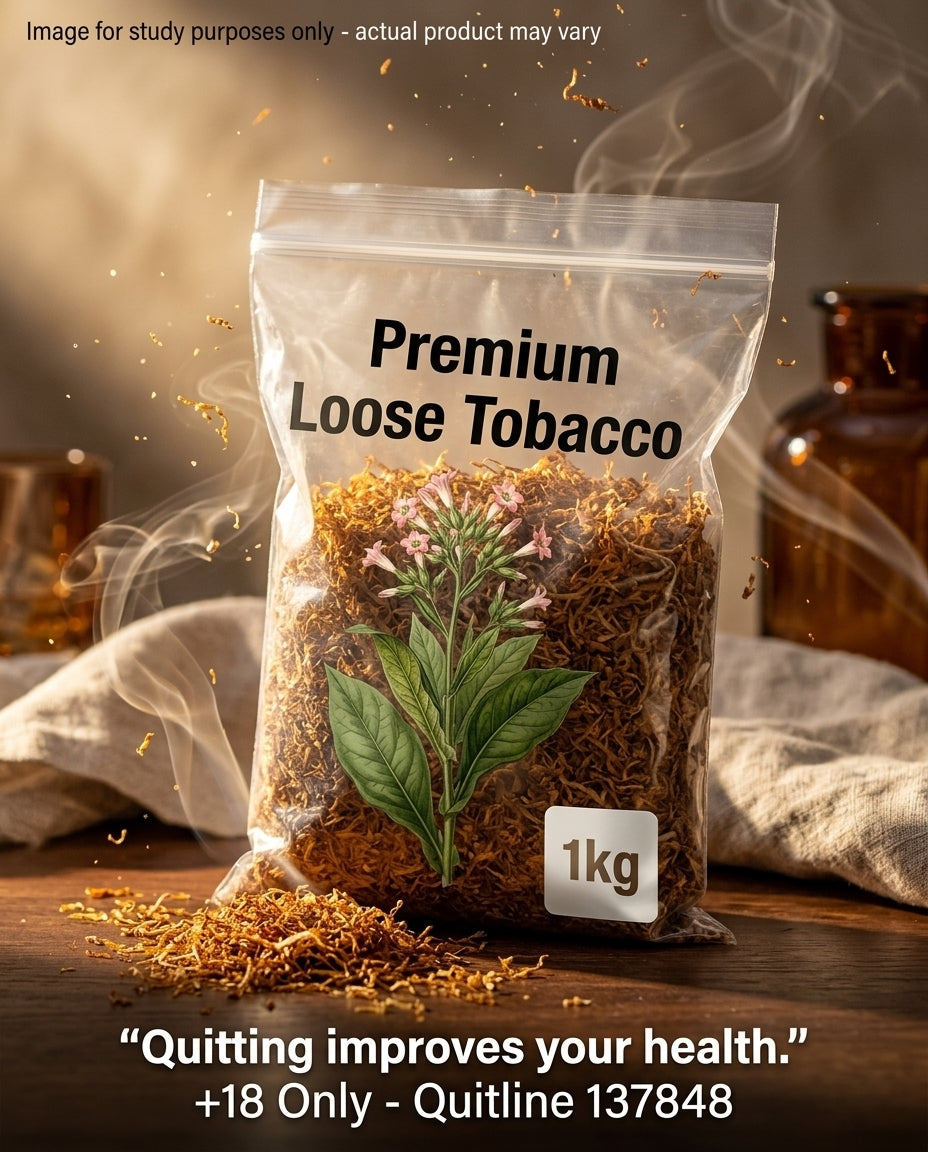














You're staring at a product page or a shop shelf in Sydney, Melbourne, Brisbane, Perth or Adelaide, and every pouch seems to promise the same thing, yet the names, cuts and pack sizes don't line up. That's the problem with loose tobacco brands in Australia right now, the category looks familiar, but the rules behind it have changed enough that older buying habits don't always help.
People often start by comparing flavour and price, then realise they're also comparing legal pack sizes, brand families and whether a label still means the same thing it meant a few years ago. If you want a clean starting point, this guide keeps the focus on the practical stuff, what the brand names mean, why the shelves changed, and how to read a pouch without getting caught out by format confusion. For a broader consumer angle, even a cigar pairing piece like Blind Barrels discusses whiskey pairing shows how much context matters when products are grouped by style rather than just by name.
Table of Contents
- Introduction to Loose Tobacco Brands in Australia
- Evolution of RYO Tobacco in Australia
- Categories of Popular Loose Tobacco Brands
- Comparing Blends Cuts and Strengths
- Price per Gram and Carton Comparison
- How to Choose Based on Taste Price and Usage
- Buying RYO Tobacco Online and Shipping Tips
- Storage Freshness Health and Legal Reminders
Introduction to Loose Tobacco Brands in Australia
A lot of Australian RYO smokers end up in the same place. They search for a familiar brand, see several pouch formats, then notice that the cheapest option isn't always the smallest pouch, and the pouch they used to buy doesn't look quite the same anymore. That confusion is normal, because brand naming, pack sizing and product form now matter as much as the label on the front.
What buyers are really comparing
Loose tobacco shopping is rarely just about taste. It's usually a mix of blend preference, budget, and pack format, especially when a smoker wants something affordable and doesn't want to overpay for a product that turns out to be harsher, weaker or harder to roll. Australia's market has also been shaped by long-running tax changes, so price surprises are part of the experience rather than a one-off issue.
Practical rule: if two pouches sound similar, compare the format first, then the blend, then the brand family. That order saves a lot of guesswork.
Australian retail categories can also look broader online than they do in a corner shop. Coles, for example, still groups loose tobacco with cigarettes and cigars in its shopping navigation, which tells you that customers treat it as a normal category, not a specialist niche. But normal doesn't mean simple, because the rules now standardise what can sit in that category and how it's sold.
Why this guide matters now
The biggest mistake is assuming every “loose tobacco brand” is just a flavour choice. In Australia, the category now sits inside a tighter regulatory system, so the same brand name can be tied to different pack sizes, different strengths and different availability across retail channels. That's why a clear reading of the label matters more than a casual glance.
A useful way to approach the shelf is the same way a careful buyer would approach any everyday product. Start with what the item is, check the size, then decide whether you're looking at a pouch for RYO, a cigarette brand being used as a comparison point, or a broader brand family that has shifted over time. The rest of this guide follows that logic, step by step, so the category feels less noisy and more usable.
Evolution of RYO Tobacco in Australia
A shopper standing at the shelf today sees a market that was shaped by regulation as much as by preference. The current form of RYO did not emerge by chance, because Australia's tobacco market was changed by the 2010 excise redesign and the repeated 12.5% annual excise increases from 2013 to 2020 recorded in the market history for Australian tobacco Australian tobacco market share and brand share. Once prices rose across factory-made cigarettes and loose tobacco, shoppers began paying closer attention to what each pouch or pack delivered.
How price pressure changed brand choice
When the shelf price climbs year after year, smokers do not all respond the same way. Some keep buying premium cigarettes, some switch toward value brands, and many look harder at RYO because it gives more control over how much tobacco is used per smoke. The Australian market history shows that premium names such as Benson & Hedges, Dunhill and Marlboro declined steadily after 2009, while value brands like Horizon, Holiday and Choice rose until about 2009 before later falling as the market kept changing Australian tobacco market share and brand share.
That pattern matters for loose tobacco because it shows price-sensitive consumers did not maintain exclusive loyalty to one label. They moved between segments and formats, much like a buyer comparing sizes of the same household product before choosing what fits the budget. RYO became a practical answer for shoppers who wanted more control over unit cost and usage, and that is why it gained a clearer place in the market.
Simple takeaway: when cigarette prices move up, RYO becomes more attractive to buyers who think in terms of value per smoke, not just brand loyalty.
What the bulk format says about the market
The supply side also helps explain why loose tobacco looks the way it does now. Australia's tobacco market is largely supplied by British American Tobacco Australia, Imperial Tobacco Australia and Philip Morris, and they cover value, mainstream, premium and RYO products Australian tobacco market share and brand share. Loose tobacco is therefore not an outside category, it sits inside the same commercial system as the better-known cigarette brands, with the same brand families often appearing in different pack formats.
For a practical example, some shoppers looking for a bulk rolling option will come across Drum Blue Japanese Premium Loose Tobacco 500g, Rich Balanced Rolling Blend, Cheap Bulk Carton Price, Nationwide Dispatch. The useful part is the format, not the sales language. Bulk and multi-pouch offers exist because Australian buyers now compare tobacco much like a regular household item, with attention to freshness, consistency and unit-price clarity. The category also follows standardised pack formats more closely than many older guides suggest, so the name on the pouch can matter less than the way the product is presented and sold.
If you are comparing current options, a range of loose tobacco products makes the format differences easier to see side by side. That is often where naming conventions become clearer, because the same brand family can appear in a pouch, a bulk pack or a related RYO listing, and each format answers a slightly different buying need.
Categories of Popular Loose Tobacco Brands

A shopper comparing loose tobacco brands in Australia will usually notice that the shelf has become more standardised than many older guides suggest. Pouches, bulk packs and related RYO listings now sit in a more organised format, so the label on the front is only part of the story. The practical question is how the product is grouped, packed and sold.
The simplest way to read the market is to split it into four buckets. That does not mean every label stays in one box forever, because regulation, supply and pack presentation keep shifting. It does help buyers sort out value brands, mainstream brands, premium options and non-domestic style products without getting tangled in similar names.
Value and mainstream brands
Value brands are usually the first stop for buyers who are watching cost closely. In Australia, names such as Horizon, Holiday and Choice have been associated with the value side of the market, especially as price-sensitive smokers moved toward cheaper options when cigarette prices rose Australian tobacco market share and brand share. That does not mean they all taste the same or use the same cut, only that they sit in the lower-cost part of the range.
Mainstream brands sit in the middle. They are usually the labels many smokers recognise without needing to think about the segment, and they often become the comparison point when someone is choosing between a budget pouch and a more polished one. The big suppliers that shape the Australian market also cover this middle tier alongside premium and RYO products, so mainstream tobacco is part of the same supply system as the rest of the category.
Premium and imported-style options
Premium loose tobacco usually puts more weight on consistent cut, cleaner handling and a more defined flavour profile. Many buyers treat premium pouches as the reference point when they want a smoother rolling feel or a tobacco character that seems more deliberate. Products like Drum Blue often come up in that conversation because smokers use them as a benchmark for consistency rather than the cheapest buy.
Practical rule: value tobacco is about keeping costs down, premium tobacco is about a more predictable roll and a more refined smoke.
Imported-style or non-domestic labels can stand out because the names feel different from the standard Australian shelf. That does not automatically make them better. It usually means shoppers expect a different flavour profile or pack style when they see them online.
If you want to compare the formats side by side, a range of loose tobacco products makes the differences easier to see in one place.
Illicit inflow and why it distorts choice
The category gets more complicated once illicit supply is included. A Philip Morris International report on illicit tobacco in Australia says Double Happiness and Manchester together account for more than 40% of the volume of total non-domestic brand inflow PMI illicit tobacco report. That concentration shows that a small number of labels dominate the illegal supply entering the market, rather than demand being spread evenly across many names.
The same report also points to pressure from the illicit market alongside legal brand segmentation, which helps explain why availability can look uneven from one region to another. A broader adult catalogue is available through the Cigarette Nearby tobacco collection, which groups loose tobacco and related formats in one place for easier comparison.
Comparing Blends Cuts and Strengths
The words on a pouch matter more than most buyers think. Blend, cut and strength shape the smoking experience in different ways, and the same brand family can feel very different once one of those variables changes. If you've ever wondered why one pouch rolls smoothly while another feels dry, wiry or too full, the answer is usually in the cut and moisture balance, not just the brand name.
Blend type changes the flavour base
Virginia-based blends are often associated with a lighter, cleaner tobacco character, while Burley-rich or mixed blends can feel fuller and earthier. Hybrid blends sit between those styles, which is why they're common in mainstream and premium RYO lines. That's also why smokers often describe one pouch as smoother and another as richer, even when both are sold as ordinary loose tobacco.
A product like Drum Blue Japanese Premium Loose Tobacco 500g is useful as a comparison point because the catalog describes it as Virginia-based with a fuller-bodied character, fine cut, and medium strength. That combination usually appeals to smokers who want a balanced roll with some flavour presence, not a sharp edge or an overly heavy hit.
Cut and strength affect how it rolls
Fine cut tobacco is easier to shape into a tight roll and often burns more evenly when packed well. Ribbon cut can feel a bit looser and may suit smokers who prefer a less compressed roll. Shag styles are usually thinner and can feel more delicate in the fingers, which some smokers like and others find fiddly.
Strength is the part buyers often overthink. A stronger pouch isn't automatically better, it just means the smoke may feel fuller or more intense. White Ox is a useful comparison name here because it's commonly used by smokers who want a bolder profile, while Drum Blue sits closer to the balanced middle Cigarette Nearby on smoother and stronger cigarette characteristics.
A smoker who likes a smoother everyday roll usually won't enjoy the same pouch as someone chasing a heavier, more forceful finish.
Menthol-style options are being constrained
Australia's product rules now prohibit flavour-altering devices and remove menthol accessories from sale from 1 July 2025 Australian tobacco product requirements. For loose tobacco buyers, that means menthol-style variants and add-on flavour expectations are getting tighter, not broader.
That matters for shopping because some older buying habits still assume you can “fix” a pouch with accessories or flavour tweaks. In the current rules, that room is shrinking. Buyers comparing products now need to focus more on the tobacco itself, the cut and the pack format, rather than expecting accessories to shape the final experience.
Price per Gram and Carton Comparison
Australian RYO pouches must contain 30 grams, and cartons must contain 10 packs of 20 sticks Australian tobacco product sizes. That standardisation makes unit-price comparison much easier, because you're not trying to compare random pouch sizes against each other. You can read the label, do the maths once, and compare like for like.
The table below is a simple way to think about the market. It doesn't invent a retail price, because the exact live price changes by seller and date, but it does show how buyers should line up the pack types when they compare loose tobacco against carton-style cigarette equivalents.
| Brand | Pack Size | Price per Gram | Carton Price |
|---|---|---|---|
| Value loose tobacco | 30g pouch | Compare the pouch's sticker price against the gram weight | Not applicable unless bundled by seller |
| Mainstream loose tobacco | 30g pouch or multi-pouch format | Compare on a per-gram basis across all pouch sizes | Not applicable unless bundled by seller |
| Premium loose tobacco | 500g multi-pouch or bulk bag | Divide total price by total grams | Not applicable unless bundled by seller |
| Carton cigarettes | 10 packs of 20 sticks | Compare on a per-stick or per-pack basis, not per gram | Use the full carton total |
The point of the table is discipline, not glamour. If you're browsing online, one pouch might look cheaper until you notice it's a smaller pack, while a bulk format may look expensive until you spread the cost across the full weight. That's why many RYO buyers think in gram terms first.
The other trap is comparing a pouch to a carton without adjusting for format. A carton gives you a different consumption model, while loose tobacco gives you control over how much you roll at a time. Those are not the same purchase, even if they sit in the same shopping basket.
For a quick buyer-focused method, how RYO tobacco smokers compare cost before buying is a useful reminder that shoppers usually check size, weight and bundle structure before they commit. That habit matters even more now that pack sizes are standardised.
How to Choose Based on Taste Price and Usage
The smartest choice usually comes from balancing three things at once, not chasing one of them in isolation. Taste, price and usage pattern tell you more than the brand name alone. If you smoke lightly, your ideal pouch probably isn't the same as someone who rolls several times a day.
Start with the taste you actually prefer
If you like a smoother, lighter smoke, a balanced Virginia-based pouch is usually the safer place to begin. If you want a more noticeable tobacco body, a fuller-bodied blend will feel more satisfying, but it may also feel stronger in the mouth and throat. That's why a brand like Drum Blue can work for smokers who want middle-ground flavour without jumping to a heavy profile.
A good habit is to test one pouch before you buy bulk. Smaller pouches let you judge cut, moisture and flavour without tying up too much money in a style you may not enjoy long term. That matters most if you're moving between value and premium categories for the first time.
Match the pack to your routine
Daily smokers often care more about consistency than novelty. If you roll the same way every day, a reliable fine-cut pouch is easier to live with than a product that needs constant adjustment. Bulk formats make sense when freshness control is part of your routine, while smaller pouches suit buyers who want flexibility.
Buyer rule: if you're unsure, buy the format you can finish comfortably before the tobacco loses quality.
Budget plays a different role. A lower-cost pouch can look attractive, but if it feels awkward to roll or burns too fast for your style, the savings may not feel real. A slightly more refined pouch sometimes makes more sense if it reduces waste and gives you a better roll from the start.
Use a quick checklist
- Flavour first: decide whether you want smooth, balanced or fuller-bodied.
- Cut next: choose fine cut if you want easier rolling and more even packing.
- Budget third: compare the price against the gram weight, not just the shelf label.
- Usage last: pick a small pouch for testing, or a bulk option if you already know the blend works.
That order keeps the decision practical. It also stops you from buying a name you've heard before when what you needed was a different cut or a better-fitting pack size.
Buying RYO Tobacco Online and Shipping Tips
Buying online only feels simple when the process is clean. In practice, the best orders are the ones that handle age verification, address accuracy and packaging preferences without extra back-and-forth. If you've ever had a parcel delayed because of one wrong digit in the address, you already know how much that matters.
What to check before you pay
Start with the seller's age-gated process. Adult tobacco sellers should verify identity with photo ID, and that step should be completed before you expect dispatch. If you ignore the verification email or submit mismatched details, the order can stall even if the product is in stock.
Discreet packaging is another practical detail, not a luxury. Plain outer packaging helps keep the parcel low-profile, which is standard handling on many tobacco storefronts. If you're choosing between shipping methods, compare the full order cost rather than focusing only on the delivery fee, because larger basket sizes can change the value equation.
The buying sequence that avoids mistakes
- Verify your details first. Make sure your name and delivery address match the ID and checkout record.
- Choose the right format. Decide whether you want a smaller pouch, a multi-pouch bulk option or a carton-style purchase.
- Check the shipping method. Some sellers offer free shipping thresholds, while others use a flat fee.
- Watch for the dispatch message. Tracking matters because it tells you whether the parcel has left the warehouse.
Typical Australia-wide delivery windows are often stated as 2 to 5 business days in publisher service information, so it's worth planning ahead if you're close to running out. That doesn't guarantee timing for every postcode, but it gives you a realistic expectation.
One practical option for adults comparing delivery and catalogue structure is Cigarette Nearby, which combines age-gated ordering, tracking and tobacco product listings in one storefront. If you're already comparing multiple shops, a simple guide to buying cigarettes online in Australia can help you compare the same basic factors without repeating the whole search from scratch.
Keep the shipping choice boring. The least complicated order is usually the one that arrives without needing a follow-up.
Storage Freshness Health and Legal Reminders
Loose tobacco holds up better when you treat it like a product that can dry out. A resealable container, a cool dark cupboard and, if needed, a humidity pack can help keep texture more consistent between sessions. If a pouch turns brittle, loses aroma or starts to pack unevenly, freshness has already slipped.
How to store it properly
Keep the tobacco sealed whenever you're not using it. That sounds obvious, but many smokers leave a pouch open on the bench for convenience and then wonder why rolling gets harder after a few days. Multi-pouch bulk formats can help here because you only open what you need and keep the rest sealed.
Avoid heat, direct sunlight and bathroom storage. Those places speed up drying and can make the tobacco feel stale faster. If you buy in larger quantities, split the stock into smaller sealed portions so the whole batch isn't exposed at once.
What stale tobacco usually feels like
Stale tobacco is often harder to roll, less flexible in the fingers and more uneven in the burn. It can also lose the smell and texture that made it worth buying in the first place. If you notice those changes, storage is usually the first thing to fix before blaming the brand.
Practical rule: freshness problems are often storage problems first and product problems second.
There's also a legal and health side to keep in mind. Australian tobacco sales are for adults 18+ only, and if you're thinking about quitting, support is available through Quitline 137 848 and quit.org.au. You don't need to wait until you're fully ready to use those services, either, because getting information early can make the next decision clearer.
The plain truth is that tobacco use carries health risk, and the smartest product knowledge is still no substitute for choosing not to smoke. If you do buy loose tobacco, buy it carefully, store it properly and keep the legal age rules front of mind.
If you want a straightforward place to compare loose tobacco brands, pouch formats and adult-only delivery options in one spot, visit Cigarette Nearby and check the current tobacco listings, shipping details and age-verification steps before you place an order.


