





Scanning a pack’s QR code or Unique Identifier Code (UIC) with an official manufacturer or government app is the fastest way to verify cigarette authenticity online, and it usually delivers a validity result in seconds when that pack carries a consumer-facing code. Not every pack does. Here’s what to do the moment you’re holding a carton you’re unsure about:
- Scan the code. Find the QR code or UIC, usually near the tax stamp or pack base, and run it through the manufacturer’s or tax authority’s official app.
- Inspect visually. Check the hologram, print sharpness, and tax stamp placement against what a genuine pack should show.
- Preserve evidence. Photograph the pack, the code, and your receipt before you do anything else.
Quick fact: Stamp Verifier apps built by tax authorities read a pack’s QR code and return a direct message, “Valid for UIC” or “Invalid QR Code,” giving consumers a binary answer in real time, as documented in the Philippines Bureau of Internal Revenue’s rollout.
Key Takeaways
Scanning a pack’s QR code or UIC through an official manufacturer or government app remains the fastest consumer-level check, but it confirms a code’s existence, not a pack’s full authenticity.
| Point | Details |
|---|---|
| Scan first | Use the manufacturer’s or tax authority’s own app to check the QR code or UIC before anything else. |
| Know result limits | A “valid” result confirms the code exists in a database, not that the pack is untampered or legal. |
| Watch for red flags | Destination mismatches, requests for personal data, and suspiciously low prices signal likely counterfeits. |
| Escalate when needed | Lab methods like stable isotope profiling offer over 96.8 percent accuracy for disputes scanning can’t resolve. |
| Buy from traceable sellers | Cigarettenearby offers receipt-backed orders and 24/7 support, reducing counterfeit risk before verification is even needed. |
Table of Contents
- Step-by-Step: How to Check a Pack With Your Phone Right Now
- Which Apps and Websites Actually Verify Packs?
- Why Serialization Systems Like Codentify Matter, and Their Limits
- What Verification Cannot Guarantee, and Common Scams to Watch For
- How Labs and Forensic Teams Verify Authenticity
- Immediate Next Steps if You Suspect a Counterfeit
- A Practical Take on Scanning Tools and Their Real Limits
- A Safer Route: Buying From a Retailer You Can Actually Trace
- Frequently Asked Questions
- Sources
Step-by-Step: How to Check a Pack With Your Phone Right Now
Follow this sequence, and you’ll have an answer or at least a strong lead in under five minutes.
- Set up good conditions. Use bright, even light and steady your phone camera. Glare on foil or cellophane is the top reason scans fail.
- Remove the cellophane wrap if it’s distorting the code. A crumpled wrapper is the single most common cause of a failed scan.
- Scan the QR code or UIC using the manufacturer’s official app or the relevant tax authority’s verification tool.
- Read the result carefully. Apps typically return one of four outcomes: valid, invalid code, no match found, or a destination mismatch (the pack is registered for sale in a different country).
- Cross-check the physical pack. Compare the hologram, ink quality, and tax stamp position against what the app or brand website describes as genuine.
- Save everything. Screenshot the app result and photograph the pack before discarding any packaging.
What each result actually means matters more than the scan itself:
- Valid confirms the code exists in the issuing database, but it does not prove the physical pack hasn’t been tampered with or diverted from another market.
- Invalid code or no match usually signals a counterfeit or a code that was never registered for consumer lookup.
- Destination mismatch means the product was manufactured for a different country’s market, a common sign of gray-market diversion even when the tobacco itself is genuine.
Pro Tip: Prefer the manufacturer’s own app over a third-party “verification” site. Third-party tools often lack access to the real database and can return misleading “valid” results just to keep users engaged.
One more thing: never enter your name, address, or payment details into an unfamiliar verification website. Legitimate manufacturer and tax-authority tools only need the code itself.
Which Apps and Websites Actually Verify Packs?
Legitimate verification tools fall into three categories, and knowing the difference saves you from wasting time on tools that can’t actually confirm anything.
- Government tax-stamp apps, run directly by a country’s revenue authority, checking UICs against an official database.
- Manufacturer “check” apps, built and maintained by the tobacco company itself to confirm a pack is company-approved.
- Official brand portals, websites linked directly from the manufacturer’s main domain, not third-party lookup tools.
Philip Morris International’s Check Now app is a useful real-world example: it lets consumers scan a number printed on the pack to confirm whether the product is company-approved and intended for sale in Greece specifically. That’s the model worth trusting: a named publisher, a specific market, and a direct link back to the brand’s own site.
Before you trust any app’s result, check who published it. On the App Store or Google Play, look at the developer name listed under the app title. It should read as the tobacco company or a government body, not a generic “Tobacco Verifier” account with no history and a handful of reviews.

Pro Tip: If you can’t find the app linked directly from the manufacturer’s official website or a government tax authority page, treat its results as unverified, no matter how polished the interface looks.
Why Serialization Systems Like Codentify Matter, and Their Limits
Serialization is the system behind every scan: a unique code gets printed on each pack during manufacturing and tied to a database entry that records where and when it was made. When you scan that code, you’re really querying that database.
Codentify is the serialization system most consumers will encounter in background reporting on pack authentication. It was developed as an industry marking system to enable pack-level verification across supply chains, but it comes with real caveats:
- It’s proprietary, meaning access to verification data depends on which company built and controls the underlying software.
- Adoption varies by manufacturer and country, so a code format that works in one market may return nothing in another.
- Many codes are designed strictly for supply-chain tracking between factory and distributor, never intended for a consumer-facing app at all.
Some serialization and marking technologies are protected through formal patent filings, underscoring how much of pack-level verification sits behind proprietary, vendor-controlled infrastructure rather than an open, universal standard, as reflected in European patent records for related marking systems.
That’s the core tension: the system that makes verification possible is also the reason it isn’t universal.
What Verification Cannot Guarantee, and Common Scams to Watch For
A “valid” result confirms the code exists in a database. It does not prove the pack wasn’t tampered with, refilled, or diverted from a different market’s legal supply chain. Counterfeiters have gotten skilled at copying visible codes and print patterns well enough to fool a casual glance.
Watch for these red flags:
- An app or site that asks for your name, email, or payment information before showing a result.
- A verification website with a URL that only loosely resembles the real manufacturer’s domain.
- A code that scans as “valid” but shows a destination country that doesn’t match where you bought it.
- Print quality that looks slightly off, blurred edges or uneven color, even though the code technically scans.
- A price that’s noticeably below what comparable authentic cartons typically cost from a known retailer.
Most consumer verification tools only function when a manufacturer or tax authority has actually linked that pack’s code to a public-facing database. An app claiming to verify “any brand, any country” is making a promise no single system can keep.
How Labs and Forensic Teams Verify Authenticity
When a consumer scan isn’t enough, whether for a large seizure, a public-health concern, or a dispute with a seller, forensic labs turn to methods no phone app can replicate. Stable isotope profiling measures ratios like δ13C and δ15N in the tobacco itself, then runs that data through chemometric models to separate authentic samples from counterfeits.
Researchers combining stable isotope profiling with chemometric analysis reported discrimination accuracy above 96.8% across the brands they sampled, a level of confidence no scan-based app can match.
These techniques take days and destroy the sample being tested, which is exactly why they’re reserved for disputes and investigations rather than everyday purchases.
Immediate Next Steps if You Suspect a Counterfeit
If a pack fails verification or just looks wrong, act in this order:
- Stop smoking from that pack immediately.
- Take dated, well-lit photos of the front, back, tax stamp, and the code itself.
- Save the receipt and the original packaging, don’t throw anything away.
- Run the scan again and screenshot the app’s result.
Then report it. Most manufacturers maintain a brand reporting form for suspected counterfeits, and your national tax authority or consumer protection office will often accept photo evidence directly. Include the seller’s name if you bought it online, since that speeds up any refund or investigation. Preserving dated photos alongside your scan results genuinely improves your odds of a resolution, whether that means a refund or a formal enforcement action.
A Practical Take on Scanning Tools and Their Real Limits
Scanning solves most everyday doubts, and it’s the right first move every time. But treat a “valid” result as a strong signal, not a final verdict. When something still feels off, a mismatched destination, a price too good to be true, trust that instinct over the app and escalate to the brand or the seller directly.

A Safer Route: Buying From a Retailer You Can Actually Trace
Scanning codes helps after the fact, but the simplest way to avoid counterfeit risk altogether is buying from a retailer that controls its own supply chain from the start. Cigarettenearby sources directly from established brands and keeps every order tied to a receipt and a traceable transaction, so you’re never left guessing where a pack actually came from.
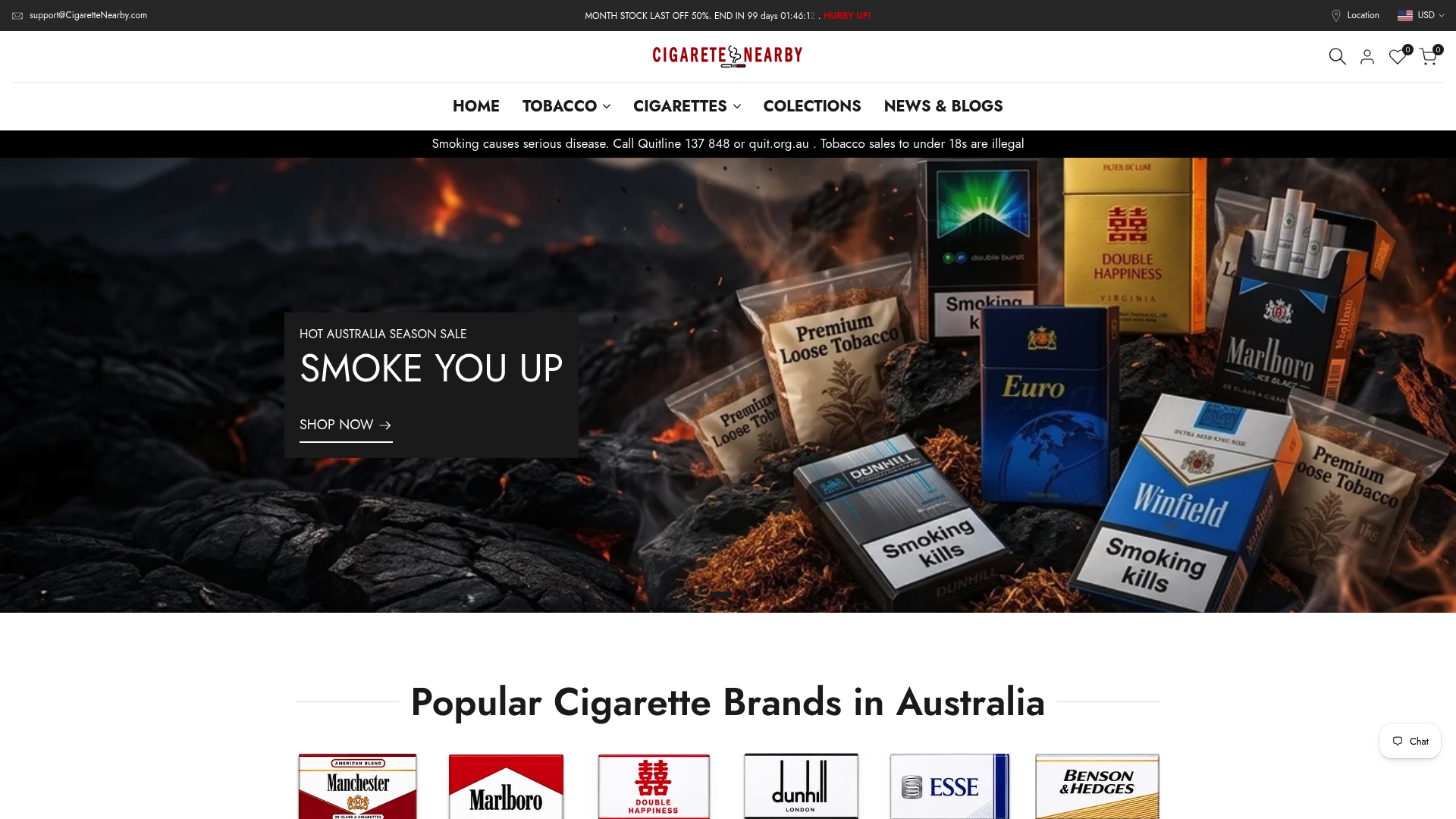
Look for the same trust signals here that you’d expect from any legitimate seller: verified payment processing, a clear returns policy, real product photos, and support you can actually reach. Cigarettenearby backs orders with 24/7 customer support and discreet, fast delivery, so if something ever looks off on arrival, there’s a direct line to resolve it rather than a dead-end verification app. Browse current vendor listings to see stocked brands with clear sourcing, or check the most popular products if you want to start with what other buyers already trust.
Frequently Asked Questions
Can I verify cigarette authenticity online without an app? Some tax authorities offer web-based lookup tools where you type in a UIC manually, but a dedicated app usually gives faster, more reliable results since it’s built to read codes directly from your camera.
What if my pack has no scannable code at all? Many packs, especially older stock or certain markets, carry no consumer-facing code. In that case, visual inspection of the hologram and tax stamp is your only option short of lab testing.
Does a valid scan mean the cigarettes are 100% safe? No. A valid result confirms the code matches a database entry. It doesn’t guarantee the pack wasn’t tampered with or that the tobacco inside matches genuine product.
Are third-party verification websites trustworthy? Treat them with caution. Legitimate verification almost always traces back to the manufacturer or a government tax authority; unaffiliated sites asking for personal information are a warning sign.
Sources
- Codentify
- Ekathimerini
- Stable isotope profiling of cigarettes assisted with chemometrics for authenticity determination (ScienceDirect)
- Availability of Mobile Application to Authenticate Internal Revenue Stamps on Cigarettes (Stamp Verifier app)
Recommended
- Buy 555 Cigarettes Online – Affordable Premium VN Cartons with Quick N – Cigarette Nearby
- Cheap Mevius Cigarettes Online – Buy Japanese Cartons with Fast Nation – Cigarette Nearby
- How to Find Better Cigarette Value Without Only Looking at Price – Cigarette Nearby
- Where Adult Smokers Search Before Ordering Cigarettes Online – Cigarette Nearby


