








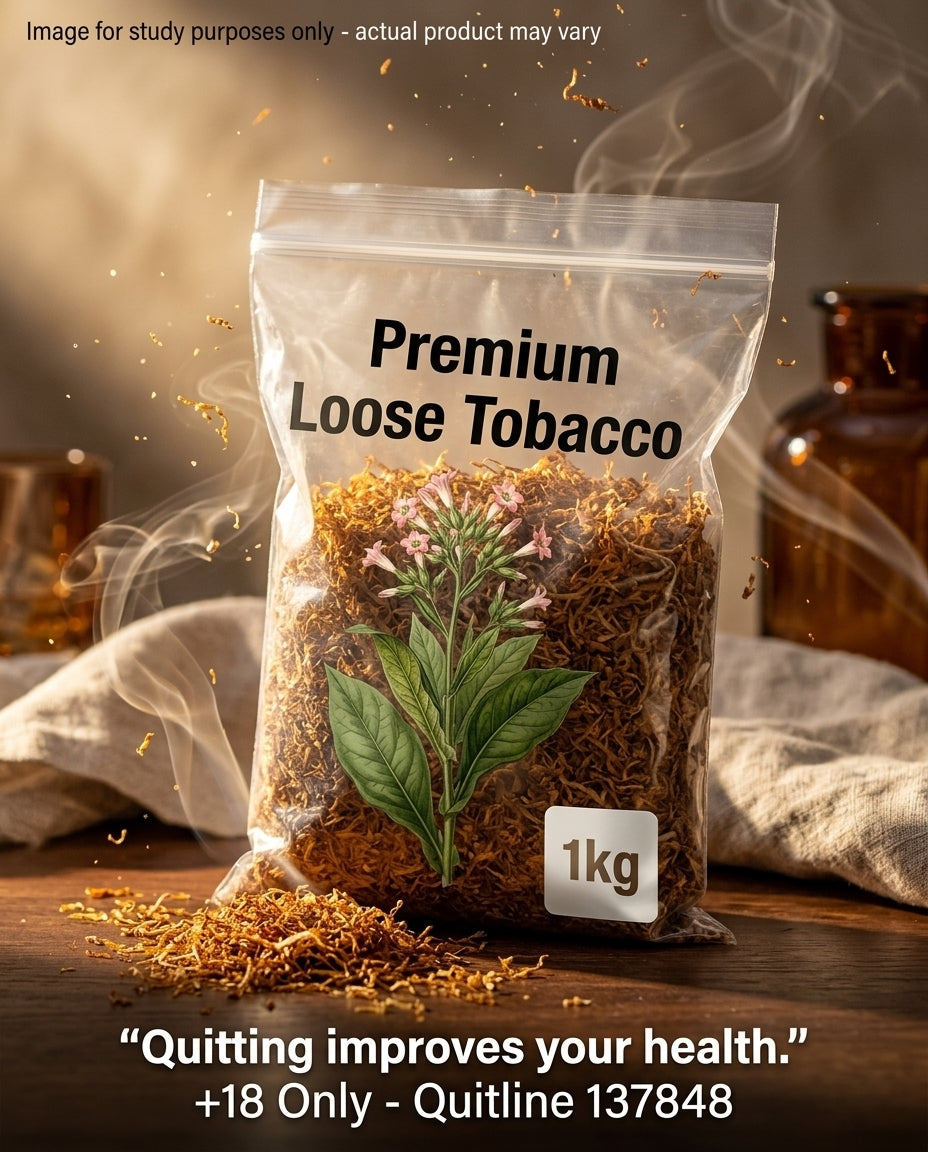








A$2,445.26 per kilogram is the current tobacco excise rate from 3 March 2026 to 31 August 2026, and a 1 kg bag of rolling tobacco usually lands around A$300 to A$335 at retail depending on brand and format. That gap is the whole story behind rolling tobacco prices Australia, because the shelf tag is carrying a heavy tax load before you even get to the tobacco itself.
A lot of shoppers in Sydney, Melbourne, Brisbane, Perth, Adelaide, Hobart, Darwin, and regional towns keep comparing pouches and wondering why the “same” product keeps jumping. The answer is usually less about the blend and more about excise, pack size, and where you buy it.
Table of Contents
- Why Rolling Tobacco Prices Keep Changing in Australia
- Current Rolling Tobacco Price Ranges Across Australia
- How Pack Size and Brand Affect Your Per-Gram Cost
- Where to Buy Rolling Tobacco Legally in Australia
- Practical Tips to Reduce Per-Unit Cost on RYO Tobacco
- What the Data Shows About RYO Pricing Trends Since 2004
- Key Takeaways and Responsible Purchasing Notes
Why Rolling Tobacco Prices Keep Changing in Australia
You walk into a tobacconist in Melbourne or Brisbane, grab the pouch you usually buy, and the number on the shelf has moved again. That's normal in Australia, because rolling tobacco pricing is anchored to excise, not just brand choice or packaging.
Excise does most of the heavy lifting
The clearest signal is the ATO's tobacco excise schedule. From 3 March 2026 to 31 August 2026, tobacco not in stick form, or in sticks over 0.8 grams, is taxed at A$2,445.26 per kilogram (ATO excise duty rates for tobacco). That number matters because loose tobacco is priced off weight, so a pouch's shelf price rises when the tax base rises.
Practical rule: if the tax per kilogram moves, your loose tobacco price moves with it, even when the brand name hasn't changed.
That's why a pouch that felt “normal” last month can look overpriced today. It isn't just retailer behaviour, it's the tax layer working through the whole market.
The jumps are not subtle
Australia has already seen how sharply the tax step can hit the register. A national tobacco tax analysis reported that in September 2020, RYO prices rose by 11.45% in a single month, while factory-made cigarettes rose by 6.51%, and then RYO rose again by 1.91% in October (PubMed study). That kind of movement explains why regular buyers in NSW and QLD often feel like their usual shop has become a moving target.
A useful way to think about it is simple. The sticker price is only partly the tobacco. A growing share is government duty, so the shelf label tells you as much about tax policy as it does about the pouch itself.

The old assumption that RYO is always the cheaper option doesn't hold automatically anymore. It depends on weight, channel, and how often excise has been pushed through the market. For a broader retail context, I also keep an eye on the way wholesalers and resellers explain their pricing, including the general market structure discussed in this wholesale tobacco Australia guide.
Current Rolling Tobacco Price Ranges Across Australia
The cleanest way to read rolling tobacco prices Australia is to stop thinking in terms of a single “usual price” and start thinking in bands. Australia's tobacco market is segmented, and the gap between a mainstream retail shelf and a bulk online listing can be wide.
What the market bands look like
Mainstream cigarette prices in independent guides sit around A$35 to A$55 per 20-pack, with value brands such as Manchester around A$35 to A$42 and premium brands such as Marlboro around A$52 to A$58 (2026 price guide). That matters for RYO shoppers because it shows how heavily the legal market is compressed by tax, even before you get to loose tobacco.
For rolling tobacco, the bulk formats are where the numbers get interesting. Aggregated Australian pricing shows 1 kg bags commonly around A$300 to A$335, while some 150 g pouches sit around A$418 to A$482 on certain aggregator sites (bulk price listings). The small-pouch number looks strange until you remember that channel, packaging, and tax pass-through all sit on top of the raw tobacco.
| Format | Typical Price Range (AUD) | Example Brands / Notes |
|---|---|---|
| 20-pack cigarettes | A$35 to A$55 | Mainstream retail guide range, varies by brand |
| 20-pack value brands | A$35 to A$42 | Example: Manchester |
| 20-pack premium brands | A$52 to A$58 | Example: Marlboro |
| 150 g loose tobacco | A$418 to A$482 | Aggregator listings, channel-dependent |
| 1 kg loose tobacco | A$300 to A$335 | Bulk format, lower implied cost per gram |
A practical comparison matters more than the shelf tag. A 1 kg bag spreads the fixed tax and handling costs across far more grams, so the implied per-gram cost often drops materially versus smaller pouches. That's why bulk buyers in Sydney, Perth, and Adelaide usually compare grams first and brand second.
If you've been searching for a simple way to spot the deal range, start by checking whether a listing sits close to the bulk bands above or looks strangely detached from them. The article on how to find cheap rolling tobacco in Australia without comparing forever is useful precisely because it pushes you towards unit cost rather than sticker shock.
The 1 kg format also changes buying behaviour. A bulk item like Premium Loose Tobacco 1kg is built around long use and consistent handling, which is why larger-volume shoppers tend to treat it as a gram-cost purchase rather than a pouch purchase.
How Pack Size and Brand Affect Your Per-Gram Cost
The number on the packet matters less than the number per gram. That's the part most price comparisons miss, and it's where a lot of buyers overpay without realising it.
The formula that actually helps
Per-gram cost is straightforward.
Price per gram = total price ÷ grams in the pack
Once you use that, the apparent bargain on a small pouch often disappears. A small branded pouch can look reasonable on the shelf and still work out dearer than a larger unbranded or semi-branded bulk bag.
A cheaper-looking pouch isn't always the cheaper buy.
That's especially true for regular hand rollers in regional NSW, Victoria, and Queensland. If you smoke steadily, the lower per-gram cost of a bulk pouch starts to matter much more than the front-of-pack presentation.
Size changes the maths fast
Here's the practical pattern. A 1 kg bag usually wins on unit cost because the tax and handling are spread across more tobacco. A 500 g bag often sits in the middle, giving you a lower per-gram cost than a small pouch without forcing you into the biggest format. Smaller pouches are more convenient, but convenience is what you're paying for.
The catalog example of Drum Blue Japanese Premium Loose Tobacco 500g is a good illustration of how bulk can be organised in 10 x 50g pouches for freshness and handling. That kind of split packaging can make sense if you don't want to open a huge single bag all the time. The trade-off is obvious, more packaging can mean a higher cost per gram than the biggest format, even when the blend is familiar.
| Pouch Size | Example Price Range (AUD) | Estimated Cost per Gram (AUD) |
|---|---|---|
| 30 g | Higher per gram than bulk formats | Use the formula to compare |
| 100 g | Usually lower than 30 g pouches | Use the formula to compare |
| 150 g | Channel-dependent, often better than small pouches | Use the formula to compare |
| 500 g | Bulk pricing territory | Use the formula to compare |
| 1 kg | Lowest implied per-gram cost in many listings | Use the formula to compare |
The point isn't that every 1 kg bag is automatically the best deal. It's that the comparison has to be made per gram, not by the sticker price. That's the only way to compare a small branded pouch with a bulk bag without getting misled by packaging size.
For brand comparisons, the broad market logic in loose tobacco brands is simple, a recognisable name can still carry a premium in a smaller pouch even when the tobacco content isn't materially different enough to justify it for every buyer. If you're cost-focused, that premium is exactly what you want to strip out of the decision.
Where to Buy Rolling Tobacco Legally in Australia
Legal buying in Australia is less about finding a secret bargain and more about choosing a channel that ships tobacco lawfully. That means licensed tobacconists, reputable Australian online retailers, and retailers that verify age before dispatch.
What a lawful purchase usually looks like
A proper Australian-based seller should ask for age verification, use discreet packaging, and state how shipping works before you check out. Typical delivery windows are often presented in business days, and bulk formats like 500 g and 1 kg bags are common online because they're easier to price and ship as unit-cost products.
The practical appeal for people in Darwin, Hobart, the Sunshine Coast, and regional NSW is straightforward. Local range can be thin, but online ordering gives more choice in pack size, especially when you're comparing cost per gram rather than buying whatever the shop has behind the counter.
A legal purchase also comes with limits. Returns are generally not part of tobacco retail once the product has been dispatched, and reputable sellers are usually explicit about that before checkout. The Australian store scene described in can you buy cigarettes online is useful because it highlights the compliance side rather than pretending every listing is the same.
A simple buying check
Before you order, make sure the listing answers three questions.
- Is the seller age-gated? Tobacco sellers should verify that you're an adult before dispatch.
- Does the shipping policy clearly state delivery terms? The final cost can change once freight is added.
- Is the product size clear? A 30 g pouch and a 1 kg bag are not comparable unless you convert them to grams.
That checklist matters more than brand hype. If a seller can't clearly state the pack size, shipping terms, or age-verification process, the deal is not worth the uncertainty.
There's also a channel issue that buyers ignore too often. Mainstream retail, bulk online, and smaller reseller channels can show very different price points, which is why the job is to compare the channel as much as the pouch. The seller's process tells you a lot about the final number you'll pay.
Practical Tips to Reduce Per-Unit Cost on RYO Tobacco
A pouch price only looks good until the hidden tax layer and the gram count are in the same calculation. Once you compare on a per-gram basis, a lot of the cheap-looking options stop being cheap.
Buy for grams, not for packaging
Start with the largest format you will use before it loses freshness. If you roll every day, a 1 kg bag usually makes more sense than repeated small pouch purchases. If your usage is lighter or you want more control over freshness, a 500 g bag can be the middle ground.
Monthly consumption is the test. If a smaller bag will sit unopened for too long, the lower-looking shelf price is not helping you. If a bulk bag will be used steadily, the arithmetic usually favours the larger format.
Practical rule: choose the size that matches your actual smoking rhythm, not the most eye-catching bundle on the page.
Compare like with like
Brand comparisons only work when the sizes line up. A named pouch can look cheaper than a bulk bag until you work out the price per gram. The reverse happens too, where a larger bag feels expensive until you see that the unit cost is lower than several smaller buys.
A practical habit is to compare two or three pouch sizes side by side, then ignore the marketing language. Check the grams, check the total price, and divide. That takes less than a minute and usually tells you more than the product description does.
A simple per-gram calculator also helps you spot the hidden cost layer that Australian guides often skip. Use the total price, add freight if it applies, then divide by the grams you are getting. If you want a broader shopping framework, how to reduce the cost of cigarettes in Australia uses the same habit of checking unit cost before anything else.
Use promotions without letting them distort the maths
Sales can help, but only if the promotion improves the per-gram price. A temporary markdown on a small pouch is still a poor buy if the gram cost stays above the bulk alternative. Limited-stock listings can be useful if you already planned to buy that size, but they should not override the unit-cost calculation.
The price tag is not the whole story. A cheaper-looking pouch with higher freight, a smaller fill, or more frequent repurchasing can cost more over time than a larger buy that looks pricier at checkout.

Quick checklist before you buy
- Check the gram weight first. Total price means little without pack size.
- Compare at least two formats. A 100 g pouch and a 500 g pouch can tell you a lot.
- Confirm age verification. Legit sellers will not skip it.
- Read the shipping terms. Freight can erase a small saving fast.
- Keep storage in mind. Freshness matters if you buy in bulk.
The best savings usually come from buying the size that matches your actual use and avoiding repeated small purchases that carry the same tax burden again and again. A careful buyer does not chase the lowest-looking shelf tag, they compare the unit cost, account for freight, and buy once in a way that fits their smoking pattern.
What the Data Shows About RYO Pricing Trends Since 2004
The Australian RYO market did not stay still after the early 2000s. It became more crowded, more segmented, and less forgiving for bargain hunters who still rely on old price patterns.
The market got denser, not cheaper
A PubMed-indexed study reported a doubling in the number of RYO brands between 2001 and 2016, along with smaller pouch sizes and price increases that were smaller than those for factory-made cigarettes (PubMed study). Analysts in the same study linked those shifts to a rise in exclusive RYO use after 2004, especially among females and young adults.
That matters because it shows how RYO moved from a niche category into a more visible part of the tobacco market. Smaller pouches became more common on shelves, but that did not make them the cheapest way to buy tobacco.
The consumer price moved hard
More recent Australian purchasing data shows the average self-reported RYO price per 0.7 g stick rising from A$0.35 in 2007/2008 to A$1.09 in 2020, while the share of smokers purchasing 20 g pouches rose from 5.1% in 2016 to 19.0% in 2020 (Australia tax analysis). Those figures point to two changes at once. Prices climbed sharply, and buying behaviour shifted toward smaller pouches.
What that means for today
The shelf now reflects a market that has been squeezed for years. Bigger pouches still tend to be the smarter unit-cost play, but the market has normalised smaller pack sizes, which can make low-volume purchases feel ordinary even when they are not efficient.
A shopper in Brisbane or Perth can see a small pouch everywhere and assume it is standard value. The data points the other way. The category has changed shape, but the per-gram logic still holds.
Key Takeaways and Responsible Purchasing Notes
The first thing to remember is that excise drives most of the movement. For rolling tobacco in Australia, price changes are usually a tax story first and a brand story second.
The second thing is that bulk formats usually win on per-gram cost. A 1 kg bag spreads the duty and handling over more tobacco, which is why it often beats smaller pouches on unit price even when the upfront spend looks higher. The third is that legal buying channels are not casual. Age verification, shipping policies, and no-return rules are part of the process, not optional extras.
A sensible buying habit is simple. Check the current ATO excise rate before a big purchase, compare two or three pouch sizes by gram cost, and treat any unusually low listing as a channel question rather than an automatic bargain. That approach works better than chasing the cheapest headline number.
There's also a health reality that shouldn't get buried under pricing maths. If you're thinking about cutting down or stopping, Quitline 137 848 and quit.org.au are there for support, and they're worth using if you want a practical next step.
Cigarette Nearby lists RYO tobacco, carton cigarettes, and bulk formats for adult buyers who want to compare pack sizes and shipping terms in one place. If you're checking rolling tobacco prices Australia and want to see how bulk listings, age-gated ordering, and delivery options are presented in practice, visit Cigarette Nearby and compare the current catalogue against the gram cost you'd pay elsewhere.


