









Most advice on organic tobacco Australia gets the core point wrong. Organic doesn't mean safer, cleaner, or lower-risk when it's lit and inhaled. It means the leaf was grown and handled under a specific cultivation standard, and in Australia that matters far less than the rules, imports, packaging, and tax pressures that shape what reaches adult buyers.
Australia's market is small, tightly controlled, and heavily import-dependent. The key question isn't whether “organic” sounds better, it's whether the claim is genuine, certified, and even available through regulated channels. If you're buying for value, consistency, or simple product comparison, you need to look past the label and read the market properly.
Table of Contents
- What Organic Tobacco Actually Means in Australia
- How Organic Certification Works for Tobacco
- The Australian Tobacco Market Reality
- Organic vs Additive-Free vs Conventional Tobacco Options
- How to Verify Organic Tobacco Claims Before Buying
- Buying Tobacco Online as an Australian Adult Consumer
- Health Considerations and Cessation Resources
What Organic Tobacco Actually Means in Australia
Organic tobacco is a farming and processing claim, not a health claim. That distinction matters, because the harm from smoking comes from burning tobacco and inhaling the smoke, not from whether the plant was grown with synthetic fertiliser or chemical sprays. Australian coverage has been blunt on the basic point that roll-your-own isn't somehow safer just because it looks hand-made or “natural” in the pack, and the same logic applies to organic tobacco too.

The label describes the leaf, not the smoke
If a tobacco product is organic, the claim normally relates to how the crop was grown, handled, and certified. It says something about field practices, soil inputs, separation from conventional leaf, and recordkeeping. It does not change the chemistry of combustion in any meaningful consumer-friendly sense.
That's why the “organic” pitch often lands hardest with roll-your-own users. Younger adult smokers are especially vulnerable to the cleaner-image story, because loose tobacco feels customisable and less industrial. But the smoke still contains the same combustion products that matter most, and a thinner rollie is still a cigarette.
Practical rule: if a tobacco label sounds like a wellness category, treat it with suspicion.
For Australian buyers comparing products online, that means staying focused on facts, not branding. A product can be organic, additive-free, imported, premium, or bulk packed, and still remain a tobacco product with the same fundamental risks. If you're mapping the category from a product-design angle, Refact product development studio is a useful example of how clear claims and clean presentation matter when a market is crowded with vague wording.
Why the wording gets people confused
A lot of tobacco marketing leans on words like natural, pure, or clean because those terms trigger a safer mental shortcut. They don't tell you whether the product is certified, how it was processed, or what's in the pouch once it reaches a buyer in Sydney, Brisbane, Perth, or a regional centre.
One useful way to think about it is simple, organic describes the field, not the smoke. Once that's clear, the rest of the buying decision becomes less emotional and more practical. You're comparing certification, format, packaging, and supply chain reality, not chasing a healthier version of smoking that doesn't exist.
How Organic Certification Works for Tobacco
Organic certification for tobacco is not a marketing label you slap on a pouch and hope nobody checks. It is a system built around soil management, pest control, separation, records, and inspection. The production guidance is strict because tobacco is a crop where contamination from neighbouring conventional leaf, shared equipment, or sloppy storage can break the certification chain fast.

The production rules form the main barrier
Specialist guidance says organic tobacco depends on crop rotation, cultivation and hand weeding, strict separation from conventional leaf, and curing in organic-only barns. It also calls for buffer zones of at least 50 feet, no synthetic materials in processing, and detailed recordkeeping so inspectors can trace what happened at every stage. Those are operational hurdles, not cosmetic ones. DPP Grid claims guidelines are a useful lens here, because they show why claims need substantiation, not adjectives.
For Australian buyers, that matters because certification is only as good as the chain behind it. If a seller cannot show who certified the tobacco, how it was handled, or whether the packaging and processing stayed separate from non-organic leaf, the claim is just branding. In a regulated category, that is not good enough.
A practical way to judge a real claim is to ask three questions:
- Was the leaf certified, or just described as natural? Certification is the line between a real claim and a vague one.
- Was the product processed in certified facilities? If the answer is unclear, the claim is weak.
- Can the seller show documents, not slogans? That is the part that usually separates genuine certification from greenwashing.
Bulk formats do not prove certification
A product like Drum Blue Japanese Premium Loose Tobacco 500g, Rich Balanced Rolling Blend, Cheap Bulk Carton Price, Nationwide Dispatch may be sold on the basis of format, freshness, and consistency, but that does not make it organic. Bulk loose tobacco is just a packaging and purchasing format unless the certification paperwork says otherwise. The same goes for any other pouch or carton sold in Australia.
The internal wholesale guide at wholesale tobacco Australia is relevant because wholesale and bulk supply discussions usually revolve around format, dispatch, and stock management, not organic verification. That is exactly the problem. Buyers can confuse a convenient supply format with a certified production standard.
The Australian Tobacco Market Reality
Australia is not a big domestic tobacco-growing market anymore. The harvested area under tobacco crops fell by 71.71% from 2000 to 2020, and by 2020 tobacco land accounted for 0% of agricultural land. That's not a side note, it's the main reason “organic tobacco Australia” is a niche import conversation, not a mainstream local farming story. The Productivity Commission's tobacco paper makes the broader point clear, Australian tobacco manufacturing relies on imported leaf and the domestic supply chain has contracted into a small, constrained system.
Imports, traceability, and compliance do the heavy lifting
If local production is tiny, the market depends on import chains. That shifts the issue from farm expansion to traceability, classification, and regulatory compliance. Buyers in Australia need to care about where the tobacco came from, how it entered the country, and whether the seller can document the chain properly.
The import environment is tighter than a lot of people realise. Since 1 July 2019, cigarettes, loose-leaf tobacco, shisha or molasses tobacco, and other common tobacco products have been prohibited imports unless the importer has a permit from the Department of Home Affairs, and duty and taxes are payable at the border. That means “organic” products don't get a free pass just because they sound premium. They still move through the same controlled system as everything else. ABF's customs notice is the blunt reference point here.
The retail side is also shaped by enforcement pressure. The Australian Taxation Office estimated the 2022–23 net tobacco tax gap at 14.3%, equal to about $2.7 billion in lost excise revenue. That's a huge distortion in the market, and it affects what buyers see on shelves and online. Tobacco in Australia's policy summary captures why the enforcement climate is so sharp.
Price pressure shapes the organic conversation
That's where the consumer reality gets messy. When price pressure is intense and access is patchy, buyers often chase whatever seems cheaper, cleaner, or easier to get. Organic claims can get pulled into that mix as a premium story, even when the actual market is being driven by import friction and illicit competition.
The internal guide on how to reduce the cost of cigarettes in Australia sits in this reality. Buyers compare cost because the legal market is expensive, not because organic tobacco is magically a low-cost category. In practice, any genuine organic niche is going to remain small, imported, and heavily scrutinised.
Organic vs Additive-Free vs Conventional Tobacco Options
Australia's plain packaging rules changed the way tobacco products present themselves. Since 1 April 2024, all tobacco sold in Australia must use plain packaging with no logos, brand images, or promotional text. From 1 July 2025, standardised format rules also apply, including 20 sticks per cigarette pack, 10 packs per carton, and 30 grams for RYO pouches. The Department of Health summary is the cleanest reference for those rules.
The categories are not interchangeable
A lot of shoppers use “organic”, “additive-free”, and “conventional” as if they mean the same thing. They don't. The differences sit in farming, post-harvest treatment, and certification, not in any promise of reduced harm.
| Tobacco Product Categories Compared | Farming Method | Post-Harvest Additives | Certification Required | Typical Availability in Australia |
|---|---|---|---|---|
| Certified organic tobacco | Grown under certified organic rules | Should meet organic processing rules | Yes | Niche, usually imported |
| Additive-free tobacco | May still be conventionally grown | No added flavouring or certain post-harvest additives | Not always | More visible than organic, especially in RYO discussion |
| Conventional tobacco | Standard commercial farming | May include allowed additives | No organic certification | Widely available through legal retail channels |
The table matters because packaging now tells you less, not more. Plain packs erase the visual cues sellers once used to signal “premium” or “natural”. So buyers have to lean on product descriptions, certification evidence, and format details instead of design language.
What the market says and what it doesn't
A lot of sellers talk up “additive-free” because it sounds safer without crossing into a formal certification claim. That's a marketing strategy, not a health pathway. It may tell you something about product formulation, but it doesn't tell you the product is organically grown or lower risk.
The internal article on contents of cigarettes is relevant because it reminds buyers that what matters is what's being burned and inhaled, not the label on the outside. For Australian consumers, that's the key distinction. Organic is a cultivation claim, additive-free is a formulation claim, and conventional is the default commercial category.
My blunt advice is simple. If you want to compare products properly, compare certification, format, origin, and retailer documentation. Don't compare the marketing adjectives, because plain packaging has already stripped most of them out anyway.
How to Verify Organic Tobacco Claims Before Buying
If a seller says a tobacco product is organic, make them prove it. Don't accept “natural”, “pure”, or “premium” as substitutes for certification. In Australia's import-heavy market, the burden is on the retailer to show who certified the product, where it was processed, and whether the claim applies to the exact item you're buying.
Check the packaging, then check the certifier
Start with the pack. Look for a certification logo, then read the fine print around the certifying body's name. If the seller can't identify the certifier, or if the logo looks decorative rather than official, that's a warning sign.
The next step is to verify the certifier itself. A real organic claim should point to a named organisation, a product listing, or a traceable document trail. That's especially important for Australian shoppers buying online from regional or remote areas, where the only thing you can inspect before paying is the listing page.
Practical rule: if the seller won't show the certificate, treat the claim as unverified.
Use the retailer's own paperwork against the claim
Ask for the certificate, the product origin, and the batch or lot reference if it's available. Then compare that against the product page and any packaging photos. If the wording changes between the listing and the document, the claim is probably softer than it looks.
The internal guide on loose tobacco brands is useful here because loose tobacco listings often focus on cut, body, freshness, and pack format. Those details matter for buying, but they're not proof of organic status. The claim has to stand on its own.
A simple verification sequence works best:
- Check the seal and label: Make sure the product photos and description match.
- Verify the certifier's name: Don't accept vague “organic certified” language without a body attached.
- Scan the retailer's page or QR details: Confirm the claim points to the same product.
- Request the audit or certificate record: If the seller hesitates, walk away.
That's especially relevant in Australia's import-dominated market, where consumers often shop online because the local range is thin. If the claim can't survive a basic document check, it isn't worth paying a premium for.
Buying Tobacco Online as an Australian Adult Consumer
Buying tobacco online in Australia is about compliance and clarity, not marketing polish. A legitimate retailer should use age checks, spell out shipping rules, and keep packaging discreet. That is standard practice. What matters is whether the product, the price, and the supply chain match what the listing says.
What a sensible online purchase looks like
For Australian adults, the buying process usually starts with age verification, then moves through product selection, shipping details, and payment. A proper seller makes the format clear at checkout, especially for loose tobacco where buyers compare bulk options by weight instead of by pack art.
Border rules still apply. Imported tobacco products need the right permit, and duty and taxes are payable on arrival. A cheap-looking listing can become an expensive mistake if the paperwork is wrong. The cleanest way to check the compliance side is the official ABF's customs notice.
For domestic buyers, delivery usually depends on whether the stock is already inside Australia. A retailer should say plainly whether dispatch is local, how tracking works, and what happens if an order runs late. Discreet packaging is standard. It is not a premium feature, it is the baseline for tobacco shipments.
Compare value by format, not by slogans
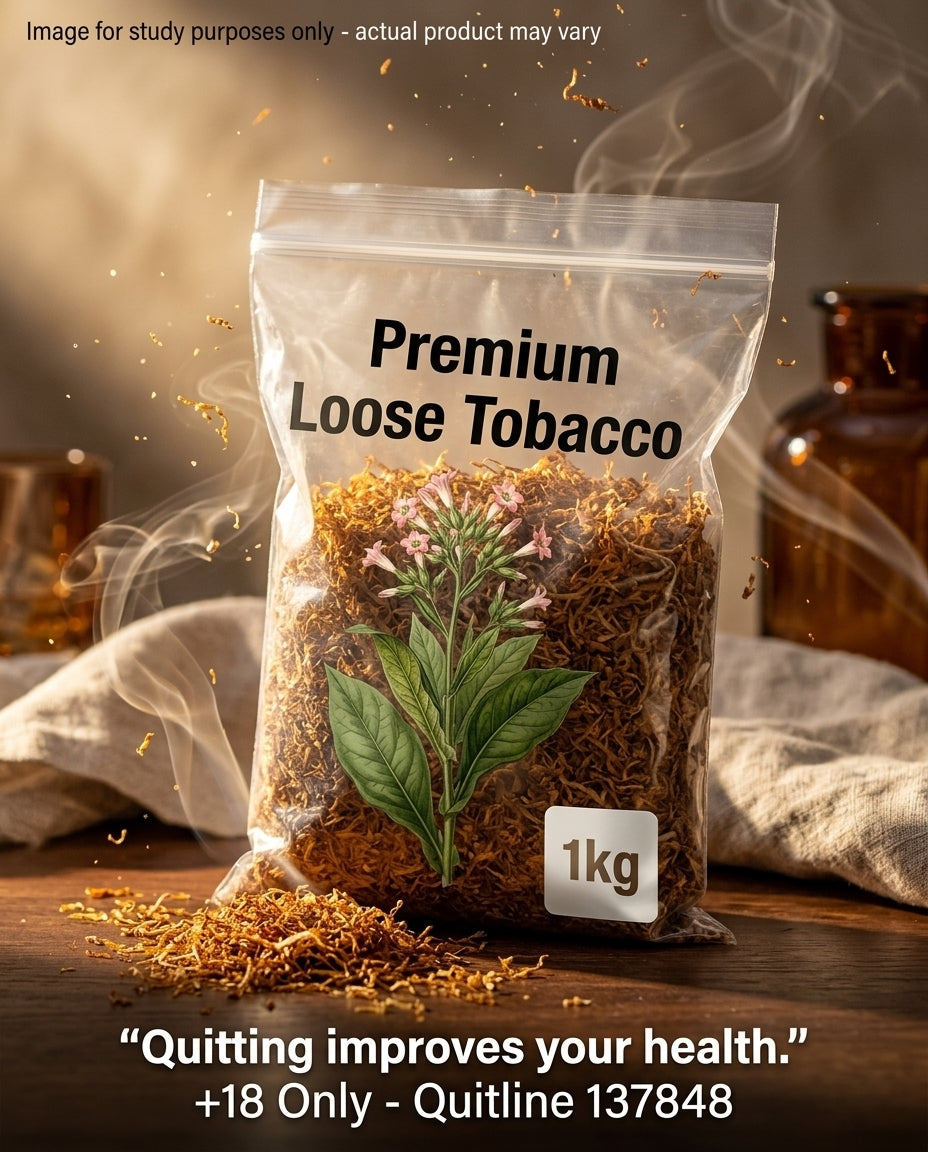
Bulk loose tobacco gets attention for a reason. A 500g bag or pouch format can suit regular roll-your-own users better than repeated small orders, but the primary comparison is unit cost, freshness handling, and consistency. Buyers often look at products the same way they look at the Drum Blue Japanese Premium Loose Tobacco 500g, in terms of bulk, freshness, and whether the format suits their use.
The internal guide on how to buy cigarettes online in Australia, what adult smokers usually compare matches that behaviour closely. Adult buyers compare delivery, format, pricing structure, and trust signals. They do not need fluff. They need a retailer that says exactly what is being sold and how it will arrive.
Creem's stores collection is a storefront-management reference point, but the tobacco buyer's checklist stays the same. Check age gating, tracking, clear format information, and straight answers about the product itself.
Health Considerations and Cessation Resources
No tobacco product becomes low-risk because it's organic, additive-free, or sold in a cleaner-looking pouch. The harm comes from burning and inhaling tobacco smoke, and that doesn't change just because the leaf was grown under different rules. That's the part consumers need to keep straight, especially where roll-your-own use is common among younger adults.
Organic tobacco still carries the same smoking problem. It may have a different farming story, but it doesn't create a safer cigarette or a safe alternative. If you're using rollies because they feel more customisable or less processed, don't confuse that with lower harm. They're still tobacco, and they still hit the lungs the same way once they're lit.
For anyone thinking seriously about cutting down or stopping, use the actual cessation tools. Quitline 13 78 48 and quit.org.au are the direct Australian resources to use, and quitting improves health regardless of what tobacco you used before. If the goal is a cleaner break, that's the route worth taking.
If you want straightforward tobacco product information, format comparisons, and adult-only buying guidance in one place, visit Cigarette Nearby. It's built for buyers who care about what they're getting, not marketing gloss. Use it to compare product types, check delivery details, and make a more informed choice before you order.


